Showing posts with label Windows Xp. Show all posts

Saturday, February 13, 2010

7 reasons to move on from ageing, tired Windows XP

There is no doubt that Adrian Kingsley-Hughes has passion for what he does, and his latest post in regards to sticking with Windows XP certainly made me chuckle. But we have to face facts that Windows XP is now in excess of nine years old, and should have ran past its self-by-date


Stick with what you know It’s old and tired

That dazzling blue interface was revolutionary for Microsoft and incredibly bold of the company to go so bright and cheerful, almost. But with the temptation of “floating” glass windows, transparency and clarity in the newer versions of Windows, you barely need to learn anything new.

You should just be able to start Vista or 7 for the first time and be guided through everything, and comfortable enough using your prior knowledge to get everything out of it that you had with XP.


Certainty New and improved certainty

Windows 7 packs more drivers in and even Ubuntu has started supporting incredibly powerful hardware, should drivers be written by a community member or the manufacturer.

Newer graphics cards especially, along with sound cards and other multimedia devices will work with Windows XP still, but they also support Windows Vista/7; with DirectX being far more powerful than ever before, surely you’d want to take advantage of that?

Cost Go open source instead?

They said Windows XP was expensive at the time, but for what it was giving you in line with the global economy, it wasn’t bad at all. Vista of course looked bad in terms of cost and Windows 7 is cheaper than ever. But as I’ve said, Ubuntu 9.10 is incredibly fast, reliable and works in line with how you’ve learned to use computers. So why not go whole hog and go open-source to a newer, better operating system instead?

It’s still supported by Microsoft …but not for long

Yes, XP is still supported until 2014 but only because it has been, granted, rather popular. But if you are ready to get a new computer, whether it be a laptop or a fully-fledged desktop computer with all singing and dancing bells on, don’t stick with XP.

Plus, you can’t even buy Windows XP anymore off the shelf, and if you’re unlucky enough to have it bundled with your new computer, then surely something doesn’t strike right with the OEM. You and the manufacturers should be aiming for future-proofing, not sticking with relics from the old decade.

Developers still support XP Developers are going next-gen

Developers have been aiming forwards for a while now, by taking advantage of new technologies in-built into the latest operating systems. You wouldn’t have TPM management on a Windows XP machine, so why not upgrade and get the best security features available (or rather was, had it not been recently hacked)?


So developers, and therefore you who use the software that they build, should be using these new features, whether it’s the latest .NET Framework or the Compiz/DWM software that makes Windows and Ubuntu look glossy and lovely. Plus, x64 Windows XP isn’t too easy to get hold of nowadays without an MSDN or TechNet subscription, whereas Windows Vista/7 and x64 editions of Linux are relatively easy.

Upgrade components to stay secure Or more overall security

I’m not here to debate whether Vista/7 is more secure than any other operating system in the world, because let’s be honest now, if you’re behind a server than your client is only as secure as your infrastructure. Even with all the patches, the hotfixes and the service packs, future operating systems will have better suited under-the-cover technologies which can prevent malware.

UAC - love it or hate it - there’s no doubt it must have helped someone out there. And failing that argument, Linux users are a far lesser risk of attack so upgrade to something open-source and shiny.

Do you really need to upgrade? No, but you should!

Let’s face it. Would you rather be living in the past or gazing ahead at the future? I’ve always been one to play with the pre-release stuff and look ahead at what’s next. Those with student email accounts may as well jump on board and take solace in knowing you’ll get a far cheaper deal if you upgrade to Windows 7, and as I’ve said before, Ubuntu is a worthy adversary if you choose the non-Windows route.

Windows XP was good for its time, but I like to think, at least hope, that we’ve moved on since 2001.
Read More

Windows XP patch fiasco gets even crazier, Microsoft now scrambling for solutions


If you ever needed a reason to go Linux, here you go. The noise surrounding this patently obscure Windows XP bug / patch fiasco has just reached a fever pitch, and now we've got engineers within Redmond scratching their heads, too. As the story goes, Microsoft recently patched a security hole that took care of an antediluvian DOS vulnerability, and in doing so, some users began to see BSODs and endless reboots. Today, we've learned that the patch has been yanked, and Microsoft is suggesting that malware is to blame. But here's the skinny -- the patch simply disturbed the malware, which called a specific kernel code that directs your PC to keel over; in other words, any application that calls that same code could theoretically leave your machine in dire straits. And that, friends, probably explains the software giant's following quote:
"In our continuing investigation in to the restart issues related to MS10-015 that a limited number of customers are experiencing, we have determined that malware on the system can cause the behavior. We are not yet ruling out other potential causes at this time and are still investigating."

Rock, meet hard place.
Read More

Wednesday, February 10, 2010

Steam gamers: Windows XP, Nvidia, Intel rule

Microsoft's Windows XP, Nvidia's video cards, and Intel's processors are what computer gamers use most, if the January hardware survey of Steam, an online service of developer Valve that delivers video games straight to a user's desktop, is any indication.

Windows XP, running 42.15 percent of Steam users' PCs, remained the most popular operating system, ahead of Microsoft successors Windows Vista and the current Windows 7. January marked the first month, however, that the Windows 7 64-bit edition has surpassed Windows Vista in gamer popularity, accounting for 19.5 percent of Steam use, compared to Vista's 19.09 percent.

The Windows 7 32-bit edition was used by 9.03 percent of Steam users, giving Windows 7 a grand total of 28.53 percent usage. It was the only operating system that saw adoption growth among Steam gamers in January, according to the company's findings.

Since hardware components are just as important to a PC gamer as the software, Steam has also broken out individual component usage. And although Advanced Micro Devices won't like to see it, the company is lagging behind in both CPUs (central processing units) and video cards.

A whopping 65.01 percent of Steam users run Nvidia video cards, which include its graphics processors, the company revealed. Just 29.82 percent of user video cards are made by AMD's ATI. Intel video cards captured 3.61 percent.

On the CPU side, things were once again tough for AMD. Steam found that 69.06 percent of its users had an Intel processor running on their machines. The remaining 30.94 percent of Steam users' machines were running AMD processors. And although dual-CPU machines still reign supreme, Steam found that quad-core machine use has grown by more than 15 percent over the last 18 months.
Read More

7 reasons to stick with Windows XP

Last week a reader challenged me to come up with 7 valid (-ish!) reasons for users to stick with Windows XP rather than upgrading to Windows 7.

Here you go!

  • Stick with what you know
    Every new OS comes with a learning curve. Sometimes that curve is gentle, sometimes it’s steep. By sticking with what you already know, you’re bypassing the whole learning curve thing altogether!
  • Certainty
    Installing a new OS is a leap into the unknown as far as hardware and software compatibility goes. If you do your research you can reduce on these unknowns, but you can never truly eliminate them. Even with the best research and testing, it’s possible that something in your hardware and software ecosystem won’t take kindly to the upgrade.
  • Cost
    While many people like to cling on to the belief that upgrading operating systems will save them money, in the real world this is rarely the case. Not only will the OS upgrade itself set you back a fair few dollars per system, but you then need to factor in other expenses (basically, replacements for anything that ends up not working because of the upgrade).
  • XP is still supported by Microsoft
    Microsoft will continue to offer what it calls extended support for Windows XP (running the latest Service Pack) up until April 2014. This means that you will still be able to get security updates for the operating system for years to come.
  • Developers still support XP
    Software developers still support XP, which means you can still find and get updates for software you run on your XP system. Remember, the OS is just a platform for other software.
  • Upgrade components to stay secure!
    Rather than upgrading your entire operating system in the hope that you’ll be more secure, upgrade old and obsolete software you have installed on your OS instead.
    Secunia PSI is a great piece of kit for ferreting out vulnerable software that’s buried on your systems.
  • Do you really need to upgrade?
    Think about it. What are you really missing by not upgrading? Again, while the sales literature for Windows 7 looks good, you need to think about how those new features will translate into value for money on the ground.

See, that was easy!

Just to be clear, I could come up with 7 reasons to stick with Vista or upgrade to Windows7 too … :)
Read More

Monday, February 01, 2010

Windows 7 adoption swells, as XP suffers record drop

Mobile operating systems make more gains, Mac OS X up slightly

Microsoft's Windows 7 took just three months to reach a penetration benchmark that Vista needed almost a year to make, Web measurement firm NetApplications.com said today.

Windows 7 finished January with a 7.5% usage share, a mark the little-loved Windows Vista didn't attain until 11 months after its January 2007 debut.

"There's no slowing of the Windows 7 growth curve," said Vince Vizzaccaro, executive vice president with Net Applications, who also noted that on Sunday Microsoft's newest OS accounted for more than 10% of all machines that were online. Windows 7's share typically climbs on weekends and holidays, as more of the people online are running home computers, which are more likely to run the new operating system.

During January, Windows 7's weekly averages increased steadily from 7.2% to 7.4%, then to 7.6% and finally to 8% in the final week. For the month, Windows 7 was up 1.8 percentage points, its second-biggest one-month increase.

As in recent months, both Windows XP and Windows Vista lost share in January as Windows 7 gained ground. Windows XP slid to 66.3%, down 1.46 percentage points, a new single-month record that erased the 1.43-point decline of November 2009. Vista, meanwhile, lost 0.5 of a percentage point to end at 17.4%. Vista has now lost usage share three months in a row, and in four of the last five months, solidifying the trend that points to a permanent decline as users abandon it for Windows 7.

If the trends of the last three months persist, Windows 7 will overtake Vista as the second-most popular operating system -- and grab the No. 2 spot behind XP -- in June.

This isn't the first time that NetApplications has compared the uptake of Windows 7 with its predecessor. Last November, Vizzaccaro noted that Windows 7 had reached a 4% share in just three weeks, a mark Vista needed five months to hit.

The bulk of Windows 7's gains have come at XP's expense, not surprising since the eight-year-old-and-counting OS is the most popular on the planet by a huge margin. Since Windows 7's late October 2009 debut, Windows XP's share has dropped nearly three times more than Vista's.

Apple's Mac OS X climbed slightly last month, finishing December with a 5.13% share after an increase of just 0.02 of a percentage point. It was the first gain posted by Mac OS X in NetApplications' data since October. The small rise is no indicator of Mac sales, of course, which Apple announced last week had set a new single-quarter record of nearly 3.4 million units worldwide.

Vizzaccaro again pointed out the mobile category as the one to watch. "This is the beginning of a shift to a lot more mobile operating systems on the Web," he said. "The trend from desktop to mobile, month to month, is a curve that looks like it's going to continue to go up."

In January, mobile operating systems powered 1.5% of all the hardware that browsed the Web during the month, Vizzaccaro said, an increase of 0.13 of a percentage point over December.

"The iPhone and iPod Touch are doing extremely well, " said Vizzaccaro. "So is Symbian and even BlackBerry. But the Android curve seems to have peaked during the month."

He was at a loss to explain the flattening of the growth of Google's Android operating system, although he mentioned the introduction of the Nexus One and the resulting complaints when customers weren't able to reach support. "A lack of customer support may work okay with beta software, but not with a cell phone," Vizzaccaro said. "No one wants to wait two weeks for an e-mail reply to a question about their phone."

NetApplications will start tracking Apple's iPad Web usage when it starts shipping in late March, said Vizzaccaro. He was pessimistic that the tablet would show a measurable share for some time, however.

NetApplications measures operating system usage by tracking the machines that browse the 40,000 sites it monitors for clients, which results in a pool of about 160 million unique visitors each month. It then weights share by the estimated size of each country's Internet population.

January's operating system data can be found on the NetApplications.com site.
Read More

Monday, January 04, 2010

Microsoft offers Windows XP, Office XP users 50 percent discount to encourage upgrades

Microsoft officials are well aware that its biggest Windows 7 and Office 2010 competitors are its own previous product iterations (Windows XP and Office XP/2003). To try and wean users away from older, “good-enough” releases, Microsoft is introducing a new licensing promotion.

The revamped “Up to Date Discount” program is targeted at small/mid-size business (SMB) customers running older versions of Windows and Office. Between January 1 and June 30 of this year, Microsoft is enabling users running Windows XP or Vista (on the operating system side) and Office XP, Office 2003 or Office 2007 (on the productivity suite side) to receive a discount of 50 percent on the cost of their licenses for Windows 7 and Office 2007 (or Office 2010, once it is released by June 2010).

The 50% discount calculations “are based on estimated retail prices and reseller prices may vary,” Microsoft officials acknowledge. But the Softies say U.S. customers who sign up for the program “would be paying $35.00 for a Windows 7 Professional Upgrade and/or $91.00 for Office 2007 Professional Plus in year 1, plus receiving all of the Software Assurance benefits (such as an automatic upgrade to Office 2010 when it launches, Office Home Use Rights, and much more) for that price.”

As you’d expect, there are lots of caveats. First,customers get the 50 percent discount only for the first year of their Open Value Subscription (OVS) payment. (OVS is a Microsoft licensing program, introduced last year for SMBs, which allows users to pay for software licenses over time and includes many of the same provisions as Microsoft’s Software Assurance licensing program.) The new deal applies only to those customers using the Professional versions of Windows and/or the Professional versions of Office.

The new promotion, which Eric Ligman, Global Partner Experience Lead with Microsoft’s Worldwide Partner Group, announced via the Microsoft SMB Community Blog on January 1, goes beyond the current Up-to-Date Discount offer. Before the new so-called “N-2″ update to the program was put in place, Windows XP users and Office XP users were ineligible for the discount. But Microsoft is now offering users of the older Windows and Office releases coverage if they’re willing to sign up for the Open Volume Subscription plan.

Meanwhile, speaking of new Microsoft licensing promotions, Microsoft is introducing “version 4.0″ of another SMB promotional licensing offer, known as “The Big Easy,” according to Ligman.

Starting January 3, SMB customers can increase dollars available for them to spend with Microsoft partners “by purchasing multiple qualifying product groups, adding Software Assurance to their orders and/or acquiring advanced, premium or Enterprise editions of the MIcrosoft Solutions.” To qualify, customers need to buy products through their Microsoft partners between January 3 and March 31 via the Microsoft Open License, Open Value and/or Open Value Subscription programs.

Products included under the program include Dynamics CRM, Office Communications Server, SharePoint Server, SQL Server, Systems Center and Windows Server, among others.
Read More

Tuesday, December 08, 2009

Microsoft to Windows 2000 and XP SP 2 users: Next year, you're on your own

If you're one of the millions of XP SP 2 or Windows 2000 users who likes their old operating system just fine, thank you, be prepared to go it alone. As of July 13, 2010 Microsoft will end support for you.

The move is clearly part of the Microsoft strategy to kill XP (aka OSRD, the Operating System that Refuses to Die). XP has proven to be such a solid and stable operating system that millions of people have so far refused to upgrade to either Windows Vista or Windows 7, to the unending frustration of Microsoft.

Ending support for both XP SP 2 and Windows 2000 server and client next year may not have a significant effect on most users. When was the last time you actually got support from Microsoft, after all? And support will still continue for XP with later service packs installed --- extended support for XP SP3 ends in April, 2014 or two years after a release of XP SP 4, if such a thing ever happens.

The real key to the end of support isn't getting direct help from Microsoft; it's that when Microsoft ends support, it stops issuing security patches. That can prove to be problematic and put your PC at risk if you have an operating system that no longer gets support. So anyone with XP who wants to keep the old operating system should upgrade to SP3 by next July. That way, you'll still get patches.

If you've got XP SP2 or earlier, and want to upgrade to SP3, download it here.
Read More

Tuesday, December 01, 2009

XP's usage share down, Win 7, Firefox & IE8 up

Data released by web metrics company Net Applications indicates that the release of Windows 7 to the general public has put a significant dent into Windows XP’s usage share.
For the November period, web usage of XP dropped by 1.45%, while Vista’s usage share only dropped by 0.2%. At the end of the month the state of play was as follows:

* XP: 69.03%
* Vista: 18.60%
* Win 7: 3.98%

Overall, a good month for Windows 7.

In other OS usage share news, Mac OS X usage share dropped slightly, down 0.16% to 5.11% (the third time this year that Mac has lost market share). The number in of itself isn’t all that significant, but the lost ground is. Also, Linux managed to claw back market share to end November with a 1% usage share, a spot it hasn’t held since July.

On the browser front, Firefox 3.5 the biggest winner in November, grabbing 1.26% usage share, up to 15.16%. Internet Explorer 8 is also seeing usage gains, up 1.19% to 19.31%. usage share for both IE6 and 7 slipped.

Browser state of play:

* IE: 63.61%
* Firefox: 24.74%
* Safari: 4.36%
* Chrome: 3.92%
* Opera: 2.31%

Net Applications measures operating system usage by tracking computers that visit the 40,000 sites monitored for clients, which represents a pool of about 160 million unique visitors each month. This data is then weighted based on the estimated size of each country’s Internet population.
Read More

Tuesday, November 17, 2009

Can Anything Replace Windows XP As the Best Netbook Operating System?

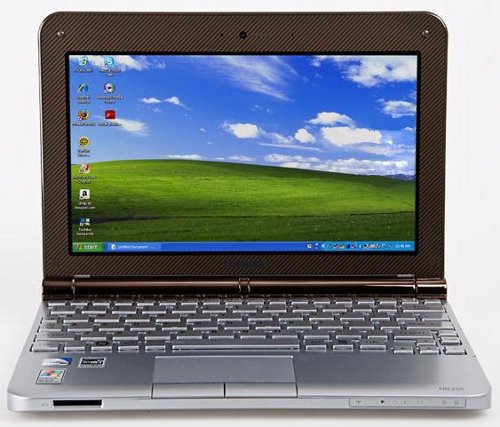
As someone who has been running Windows XP as a primary operating system for the past eight years and has seen more netbooks with the dated OS in the last year or so, I was probably more excited about the arrival of Windows 7 than Twilight fans are about the upcoming release of the vampire packed New Moon movie. However, the last two netbooks I have gotten my hands on run the lower-end and feature-missing Windows 7 Starter edition. Although it pains me to admit it, I miss the rolling green mountains and blue skies of Windows XP.

Netbook manufacturers, including ASUS, HP and Toshiba, have chosen to put Windows 7 Starter on the newest crop of netbooks and, without a doubt, did so with a push from Microsoft. (Don’t forget about the higher profit margins on Windows 7 netbooks.) In fact, Retrevo.com, which is similarly evidencing dissatisfaction with Win 7 Starter, reports that 23 of the 28 netbooks on sale at Amazon.com right now are preloaded with Starter edition. And it doesn’t surprise me that Retrevo’s survey on netbooks with Windows 7 Starter found that 54 percent of consumers would be unsatisfied with a new netbook equipped with Windows 7 Starter Edition because of limitations in the OS. I am, without a doubt, in the same camp as that 54 percent.

Though Microsoft lifted the three-application limit before releasing the slimmed-down version of its operating system in October, it managed to include a number of restrictions including lack of support for DVD playback and the graphical Aero Peek interface. My major gripes, however, lie with the following shortcomings of the OS, which are far greater than dealing with the aging Windows XP.

Locked desktop background – You cannot change the desktop background on any Windows 7 Starter system. That’s simply ridiculous. I have been changing backgrounds in Windows since my very first desktop that ran Windows 95! Can I live with a blue Windows logo on my netbook’s desktop? Sure, but why should I? Yes, Windows 7 may be more aesthetically appealing than Windows XP, but who wants to look at a blue shaded Windows logo forever?

No multi-monitor support – Last week I discovered the hard way that the Nokia Booklet running Windows 7 Starter wouldn’t let me extend its 10-inch desktop to an external monitor. Since you can only clone the desktop in Windows 7 Starter, don’t plan on keeping an email client open on the 10-inch display and your browser open on a larger monitor. (Yes, that’s my netbook setup and it’s too good to part with.)

Subpar battery life – According to reports from LAPTOP Magazine and Liliputing, Windows 7 Starter edition is getting an average of 40 minutes less battery life than netbooks running Windows XP. That is quite a bit of wasted juice. Given that battery life is one of the best selling points of netbooks, I’d prefer to get some extra run time and sacrifice some of Windows 7’s features.

Don’t get me wrong; there are a number of things better about Windows 7 Starter than Windows XP, like the ability to connect to multiple networks and connect quickly. But, as I’ve said before, I’d rather have function over form and losing the core functionality of an operating system just rubs me the wrong way. While I am aware that most of my complaints can be solved by paying $80 and upgrading to Windows 7 Home Premium, adding 80 bucks to a netbook isn’t an insignificant cost and, in some cases, that’s as much as a quarter of the cost of the system itself.

So, big deal that Windows XP looks outdated, it provides me and other netbook users with the right price along with the essentials — the ability to change the wallpaper to an image of choice, longer battery life and the capability to extend the desktop to another monitor. Of course, word is that Microsoft could be finally pulling the life support on Windows XP before the end of the year on netbooks. Maybe the threat of Google’s Chrome OS, which is supposed to be shown in an early beta form this week, will be a viable alternative or perhaps scare Microsoft from pushing Starter onto netbooks. Until then, I am continuing to name Windows XP my netbook operating system of choice.
Read More

Sunday, November 15, 2009

Windows XP Users Are Slow to Move -- Survey

While Windows Vista users are switching to Windows 7 in droves, XP users remain holdouts.

Windows Vista users are flocking to Windows 7, but a considerable number of holdouts are resistant to upgrading from Windows XP, according to an InfoWorld survey that was taken over the past several weeks.

The survey found that Windows 7 now has approximately 4 percent market share among 20,000 systems that it monitors through the exo.performance.network. The network is administered by Devil Mountain Software, and tracks users who have chosen to opt in.

The new Windows 7 users don’t seem to be Windows XP defectors -- that OS’s share is holding steady at 64 percent. And almost three years after Windows Vista’s release, its market share has barely cracked 30 percent. InfoWorld noted that Windows Vista appears to be losing market share as Windows 7 increases in popularity. However, I’m hesitant to accept whether there is any actual correlation without having seen the data.

Another recent survey by NPD Group reaffirms Windows 7’s popularity over its oft-criticized predecessor. It found that Windows 7’s initial boxed upgrades were up 234 percent over Windows Vista.

Microsoft offered significant pre-sale discounts for Windows 7. There has also been pent up demand for upgrades, because many businesses eschewed Windows Vista.

Windows 7 had a long beta cycle, and has received generally good reviews. In fact, I have not heard any real horror stories since it launched last month. That could be in part because there is no direct upgrade path from Windows XP to Windows 7: XP users must perform a clean install to upgrade to Windows 7, and I suspect many still have machines that are too wimpy for Windows 7, and will therefore get the new OS only when they buy new PCs.

We’d like to hear from you. Are you planning on upgrading to Windows 7, or are you sticking with what you’ve got (or looking for an alternative such as a Mac or Linux machine)?
Read More

Saturday, November 14, 2009

Windows 7 Adoption Nudging Out Vista, Not XP

Tracking shows that Windows 7 uptake is surging, and Vista switchers account for the lion's share.

Windows 7 is surging. After an insanely popular beta cycle, Microsoft's latest and greatest has exploded out of the gate, grabbing more than 4 percent of the real-world usage base as tracked by InfoWorld's Windows Pulse service -- after only a few weeks of general availability.

More tellingly, Windows 7 is grabbing a sizable chunk of our new users. Fully 10 percent of the most recent registrants are running some version of Windows 7, which is remarkable since, after three years in the market, Windows Vista still barely registers above the 30 percent level.

And even that number is beginning to erode: As Windows 7 picks up user share, it seems to be making most of its gains at the expense of Vista. In fact, there seems to be a direct correlation between Windows 7 adoption and Vista abandonment, with the latter losing a percentage point and the former gaining the same in a little over a week.

Of course, the lion's share of our user base remains on Windows XP. And with this legacy OS holding steady at just under 64 percent, it seems clear that the fence-sitters in the Vista-versus-XP debate remain firmly seated on their perches. In fact, it wouldn't surprise anyone to see this early Windows 7 surge taper off as the enthusiast euphoria fades and is replaced by the slow, steady grind of the corporate refresh cycle.

Still, this is an encouraging result for Microsoft and shows that there is indeed pent-up demand for something better than Vista -- even if much of that demand seems to be coming from Vista adopters themselves. It will be interesting see if this one-for-one user share correlation continues in the coming weeks. Will anyone still be using Vista a year from now?

Another interesting angle to consider: How many new Windows 7 users are coming to the new OS via direct upgrades from Vista? One of the advantages to having a living repository of over 21,000 active sites is that we can conduct all sorts of cross-tabular analysis. If, for example, we want to compare OS upgrade rates, we can simply compare the current records for a given PC (identified by its NetBIOS machine name and make/model/BIOS details) to those from an earlier snapshot of the exo.repository, which hosts the data shown in Windows Pulse. (You can add your system's data -- anonymously, of course -- by signing up for InfoWorld's Windows Sentinel and OfficeBench tool, which also lets you moniutor your own PCs's performance.)

In fact, we'll be doing exactly this sort of analysis in the coming weeks. Similarly, we'll be looking at changes in memory configurations to see if users are upgrading existing PCs with more RAM as part of a move from the less demanding XP to the more top-heavy Windows 7.

Of course, the big question is whether XP shops will finally migrate away from this nearly nine-year-old OS. So far, Vista is seeing the bulk of the user share erosion. If this trend continues, it's quite conceivable that Microsoft could see Windows 7's growth stall as the flood of Vista converts runs its course and the XP holdouts stand their ground.

Such an outcome would be disastrous for Microsoft. It desperately needs to regain control of the Windows release cycle with Windows 7, and simply swapping out the Vista community -- which, by all accounts, is ready to move almost immediately -- isn't going to do the trick.
Read More