Showing posts with label BlackBerry. Show all posts

Tuesday, February 09, 2010

Google Buzz goes mobile, except for BlackBerry and webOS

I am not very interested in any service that can’t be taken with me on my mobile phone so after seeing Sam’s coverage of Google Buzz I immediately started searching for how I could use it on my smartphones. There are actually a couple of ways to interact with Buzz on your smartphones and the easiest way (for iPhone and Android owners currently) is to simply point your mobile browser to buzz.google.com. You can read about the mobile web app features on the Google Buzz for mobile site and see a table at the bottom that shows iPhone and Android have the best support with limited support (Buzz layer on Google Maps for mobile) on Nokia S60 and Windows Mobile. Unfortunately, there is no support for Buzz on RIM BlackBerry devices at this time.


A few advanced features supported on Android 2.0+ and iPhone are Buzz on a place page, voice shortcuts, and Buzz icon shortcuts. You can actually speak “post buzz” in voice search from the Google Mobile app on the iPhone or the quick search voice widget on Android. The Buzz layer on Google Maps comes in the form of updates to G


I have a Google Nexus One and tapping the Google Buzz icon on Google Maps opens up a screen where I can quickly enter a Buzz or even tap an icon to upload a photo from my gallery or from the camera directly. You can also scroll around the map and tap on various conversation bubble icons to see what others have posted on Buzz. Google Buzz brings a location-based social networking experience to your smartphone that may turn into quite a useful service, similar to a Foursquare check-in experience.
Read More

Friday, January 22, 2010

Motorola asks ITC to ban BlackBerry imports

Patent litigation between Motorola and Research In Motion is heating up, with Motorola filing a complaint with the U.S. International Trade Commission.

In the complaint, filed Friday, Motorola alleges that RIM engages in unfair trade practices by importing and selling products that infringe five Motorola patents. The patents cover technologies related to Wi-Fi access, application management, user interface and power management, Motorola said.

Motorola is asking the ITC to investigate RIM and bar the company from importing, marketing and selling products in the U.S. that use the technologies.

RIM has been deploying delay tactics in ongoing patent litigation and has refused to design around Motorola’s technologies, Motorola claims.

The companies have been engaged in patent infringement suits dating back to early 2008. In one of those suits, RIM accused Motorola of charging exorbitant fees to license patents that are essential to implementing standard technologies. RIM also accused Motorola of infringing nine of its patents.

RIM declined to comment on Motorola’s filing with the ITC.
Read More

Thursday, January 21, 2010

BlackBerry Magnum touchscreen/QWERTY phone spotted

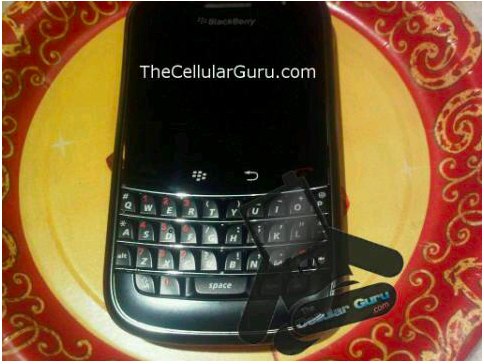
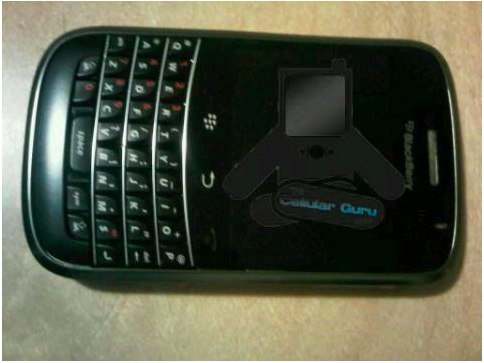
RIM’s rumored BlackBerry Magnum has been spotted in the wild, at least in prototype form. As you might quickly spot, the smartphone lacks a center trackball or touchpad; instead, this full-QWERTY BlackBerry has a touchscreen display.


The images were posted by CellGuru on Twitter, though there’s no extra information about specifications or indeed even if there’s an OS loaded onto the device. Certainly there are no images of the handset powered on.

CrackBerry suggest that this is in fact an early prototype, and not to be confused with the upcoming BlackBerry Dakota which will have a touchscreen and full hardware keyboard. That device will look significantly different and is rumored to have a better quality lens for still photography.

Read More

Tuesday, December 22, 2009

iPhone 3G now top cellphone in use in US; “Psychographic” advantage over BlackBerry say Nielsen

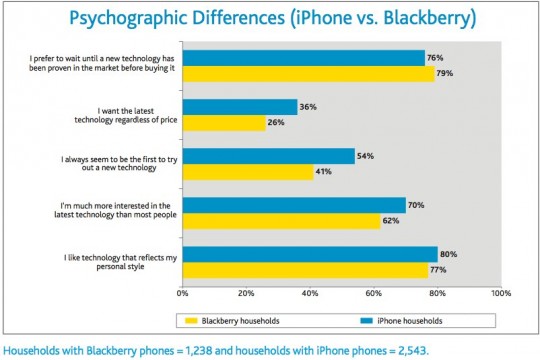
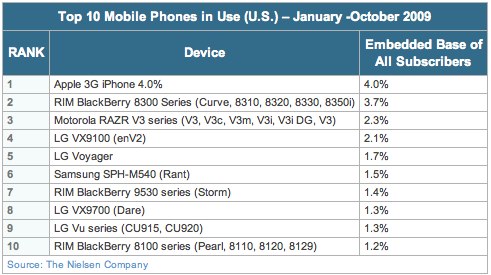
Having pulled ahead of Windows Mobile in US smartphone market share, the iPhone 3G has now been named the most popular single handset in use in the US between January and September 2009. Research firm Nielsen found that the Apple smartphone edged out the BlackBerry 8300 series (at 3.7-percent) with 4-percent of all subscribers; meanwhile a separate Nielsen report found that while RIM’s handsets currently have twice the market penetration of Apple’s (8-percent versus 4-percent), the iPhone has a “psychographic” advantage as the go-to device for users wanting the newest technology.


Nielsen reckon 15-percent of American households have a smartphone, and point to the BlackBerry’s earlier introduction as a key reason for its higher comparative market share. When questioned about being considered “bleeding edge” adopters, iPhone owners were more likely to rank themselves keener on trying new technology than their more cautious RIM-buying counterparts.

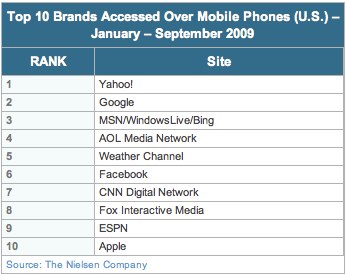
Finally, Apple.com was apparently the tenth most-accessed brand on mobile phones between January and September 2009, and in fact the only direct hardware manufacturer to make the top ten. While Google made the list, it was their homepage rather than anything Android-related.


Read More

Saturday, December 19, 2009

Top 10 Smartphone Advances Of 2009

As smartphones further cemented their place in the enterprise, Apple, Motorola, Google Android, and RIM Blackberry vied for the spotlight.

The last 12 months have been an exciting time for smartphone fans, as major players have seemingly come back from the dead, applications played a bigger role than ever, and mobile computing continued to change. This list includes 10 of the biggest stories in the smartphone space, in no particular order.

1. Motorola Mounts A Comeback

Motorola's cell phone division has been doing so poorly over the last few years that the company planned to spin off the division into an independent company. While those plans were put on hold because of the global economic recession, Motorola still needed to find a solid direction for its handset division, as well as achieve a few hit devices.

Co-CEO Sanjay Jha appears to have found that direction, and the company is focusing on smartphones powered by the Google-backed Android operating system. Motorola introduced two Android-powered devices in 2009, and it plans to release multiple smartphones in 2010 with the Linux-based OS.

Christy Wyatt, Motorola's VP of software platforms, said the decision to hone in on Android will enable it to deliver handsets that offer great end-user experiences. Calling Android a "vehicle for innovation," Wyatt said Motorola wants to deeply customize its handsets in order to stand out from the crowd.

The Motorola Cliq showed off this customization with the MotoBlur service, which is an embedded service that aggregates a user's photos, contacts, and other information from places like Facebook, corporate e-mail accounts, Twitter, and other online sources.

But Motorola's biggest moment of 2009 came with the introduction of the Droid for Verizon Wireless. The handset is probably Motorola's most visually appealing device since the popular Razr, and it is the first smartphone to feature Android 2.0. The Droid has been a hit with consumers and, thanks to a strong multimedia campaign by Verizon Wireless, it is expected to sell more than a million units by the end of the year. While the Droid and the Cliq aren't enough to completely turn around the struggling handset division, these devices lay a solid foundation for the company that essentially invented the cell phone.

2. BlackBerry Hits The Mainstream

A typical BlackBerry user five years ago was a busy mobile professional who always needed access to corporate e-mail. While Research In Motion still has a dominant share with this type of user, BlackBerry smartphones have definitely gone mainstream. During its second quarter of 2009, the company said more than 80% of its new subscribers were non-enterprise users.

RIM has noticed this shift as well, and it is rolling out consumer-friendly devices like the BlackBerry Storm 2 and the low-cost BlackBerry Curve 8520 to capitalize on this market. It has also launched an application store and a social network to appeal to mainstream users, and RIM's growth potential in the casual market helped it top Fortune's list of the world's fastest-growing companies.

Competing in the casual space does represent multiple challenges though, as even the most die-hard BlackBerry fans have to admit RIM's user interface and multimedia capabilities lag behind companies like Apple. But RIM is confident that it can continue to deliver enterprise-grade services while still catering to the mainstream.

"It's much easier to go from enterprise to consumer because once you get the foundation correct, it's easy to turn off features if you want," said Mike Kirkup, RIM's director of developer relations. "Things like security and the basic building blocks that are required for businesses are difficult to add in after the fact."

3. Apple Revamps The iPhone

When Apple introduced the iPhone 3GS in June, most analysts saw it as an evolutionary upgrade, rather than a revolutionary improvement to the hardware. With a boosted processor, better camera, more storage space, and a digital compass, the iPhone 3GS was arguably a larger improvement from the previous version than the iPhone 3G was. Many IT departments also appreciated the hardware encryption and true support for ActiveSync policies because it made it easier for the iPhone 3GS to become a good corporate citizen.

But Apple's smartphones have never really been technologically above their competitors, as the first iPhone didn't have 3G access or a GPS chip. Apple has been wildly popular in the smartphone space because it continues to add new capabilities with new versions of the software. The iPhone OS 3.0 fixed multiple nagging holes in the platform like copy and paste, and it added features like universal search, voice memos, and remote wiping in conjunction with the MobileMe service. The latest OS also added more than 1,000 application programming interfaces for developers, and this opens the door for more innovative programs.

Apple has sold more than 21 million iPhone units, and has inked deals in new markets like China and South Korea. Thanks to 3.0 OS improvements, the device is also finding its way into corporate environments.

There are still a few questions about the iPhone's exclusivity in the United States though, as the deal with AT&T is reportedly set to end in 2010. Additionally, the competition has gotten a lot better since the debut of the original iPhone, and there are credible competitors on every major U.S. carrier.

Even with its potential hurdles, the iPhone appears to have strong momentum that shows little signs of slowing down.

4. Android Army Gathers Soldiers

For most of 2009, the idea of Android was more appealing than the devices. The T-Mobile G1 was a geek's dream but it lacked enterprise support and the form factor was hit or miss. In the second half of the year however, there has been a flood of attractive Android smartphones from the likes of HTC, Samsung, LG Electronics, Motorola, and smaller manufacturers. An Android phone can now be purchased on Sprint Nextel, T-Mobile, and Verizon. So far, AT&T has not committed to Android, but rumors suggest it will land a device sometime next year.

Google said it expected up to 20 Android-powered devices to be released by the end of 2009, and companies including Sony Ericsson and Asus-Garmin are expected to release Android smartphones in 2010. Developers also are taking Android seriously, as there are now more than 13,000 programs in the Android Market.

But some studies suggest content creators aren't very happy with Android because of low download volumes and trends that indicate Android users aren't likely to pay for apps.

The wide range of Android devices also potentially presents fragmentation problems, as some developers are already grumbling about having to optimize apps for a variety of screen sizes and form factors. Additionally, companies like HTC and Samsung are layering their own user interfaces of top of Android, and this could eventually lead to some compatibility issues.

For Google, the growing success of Android exposes more users to its ecosystem and potentially to its online advertising juggernaut. Enterprise mobility specialists like Good Technology and Zenprise also said there is growing interest from corporations wanting to use Android-powered smartphones.

While the 2.0 version boosted enterprise features, Android still lacks crucial enterprise necessities like hardware encryption and full ActiveSync policy support. Google said it plans to bake in more enterprise-friendly features in future versions of the mobile OS.

5. Mobile App Market Explodes

Mobile apps have been around nearly as long as smartphones, but the space has really heated up over the last year thanks to the success of Apple's App Store. Apple iPhone and iPod Touch owners have downloaded over 2 billion programs, and developers are flocking to the platform. It's particularly impressive considering Apple CEO Steve Jobs originally wanted all iPhone apps to be Web-based only.

While Apple is leading the space, the competition is not as far behind as it may seem. The Android Market now has more than 13,000 programs, and there are more than 20,000 Windows Mobile apps, although most of these aren't in the official store. RIM hasn't given any download details about its BlackBerry World, but it said it is pleased with the number of users and paid downloads. Nokia, Samsung, and Palm have also rolled out their own app stores, and many are trying to capitalize on the growing discomfort with Apple's role as gatekeeper for the App Store.

The surge in apps is creating multiple opportunities for developers, but these content creators are facing an increasingly fragmented world. With the iPhone, BlackBerry, Android, Windows Mobile, Symbian, and Palm, it is becoming increasingly difficult for developers to support all these platforms. Tools like Qt may help alleviate these problems, and Google is predicting that the Web may eventually be the ultimate mobile platform.

6. Microsoft Tries To Keep Pace

The consensus in many analyst circles is that Microsoft is a step behind its competitors in the smartphone space, but the company made multiple moves in 2009 to stay in the race. While it has lost overall market share, the growth of the smartphone market means more Windows Mobile smartphones were shipped in 2009 than in 2008.

The company released Windows Mobile 6.5 in October, and the software update added increased support for touchscreen interfaces, a refined user interface, and multiple features. The OS was widely panned in the tech press, but industry experts said the software was well-received in the enterprise market.

"People were looking forward to 6.5 because it allowed a lot more administrative capabilities," said Ahmed Datoo, VP of marketing for Zenprise. "While I can't really comment on the end-user side, I know it made Windows Mobile devices a lot easier to manage and IT folks greatly appreciated that."

The updated OS has also been well-received by some handset makers, as Microsoft expects more than 30 devices to have shipped by the end of the year from manufacturers like HTC, Samsung, LG Electronics, Toshiba, and others. Windows Mobile 6.5 also puts the platform on par with its competitors by adding Windows Marketplace for Mobile, which provides end users with an over-the-air way to buy, download, and install apps.

Microsoft's mobile OS is facing some stiff challenges though, as the enterprise space is clearly dominated by RIM, and Windows Mobile has not caught on with the mainstream users like the iPhone has. Motorola has also shunned the current version of Windows Mobile in favor of Android, and there's concern that other handset makers may follow suit.

Microsoft does have a strong community of developers in its favor, and the company is committed to developing and improving its mobile platform. However, some analysts believe it will not be able to make a significant turnaround until Windows Mobile 7, which is expected to be released in the second half of 2010.

7. Palm Becomes Relevant Again, Kind Of

Not too long ago, Palm owned the U.S. smartphone space, but as 2009 started the company was struggling mightily. While it still sold millions of Palm Centro handsets, RIM and Apple were handily outselling it in the high-end smartphone space. Expectations weren't very high when Palm said it would announce a new OS and smartphone during January's Consumer Electronics Show, but the company wowed the press with the introduction of webOS and the Palm Pre.

"Wow," said Ryan Block of gdgt.com after CES. "Well, that was kind of amazing, and I don't say that very often. Yes, we are lacking a LOT of really important details, but there's little doubt that Palm is back in a big way, and that this OS and device has the potential to make up for many of their missteps over the last five years."

The Pre, released about six months later, was met with solid reviews, but failed to produce blockbuster sales numbers. The rival iPhone 3G and iPhone 3GS each sold over one million units in their opening weekends, and most analysts predict the Pre won't hit those numbers by the end of the year. Palm recently released a GSM version of the Pre for the European markets, and this should help goose sales.

The second webOS smartphone, the Pixi, was also released exclusively on Sprint in November, and the $100 device should be appealing to teenagers and first-time smartphone buyers.

But the smartphone space is increasingly being dominated by deep-pocketed rivals, and some analysts worry if Palm will have the resources to compete. For example, rival RIM also primarily makes smartphones, but it has nearly eight times the number of employees and significantly more revenue.

Palm has laid its bets on webOS, and CEO Jon Rubinstein has said the company is preparing multiple devices that should eventually get on more U.S. carriers. Palm's size also means it can be profitable even if it only manages to carve out a relatively small piece of the growing smartphone market.

8. Google Voice Can't Get On The iPhone
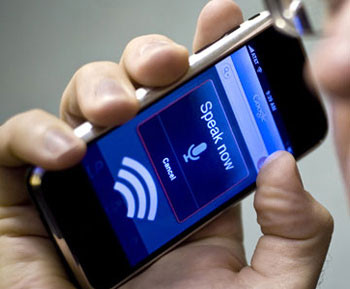
At first glance, Google Voice not being able to get into Apple's App Store may not seem like a big deal because the invite-only call forwarding service only has a few thousand users. But the process could be an indicator of what types of services and apps are allowed on users' smartphones in the future.

Google submitted its app to the App Store in June, but the program was never approved and Apple pulled a third-party Google Voice app because it duplicated existing functionality. The move drew criticism from multiple news publications, and it even drew the attention of the Federal Communications Commission.

Many suspected AT&T had a hand in the rejection because the app could potentially cause it to lose revenue with its ability to make cheap long-distance calls and send free text messages. AT&T denied any involvement in the App Store approval process, and Google pointed the finger at Apple.

"Apple's representatives informed Google that the Google Voice application was rejected because Apple believed the application duplicated the core dialer functionality of the iPhone," Google said in a letter to the FCC. "The Apple representatives indicated that the company did not want applications that could potentially replace such functionality."

While Apple has faced some flack for its approval process before, the Google Voice app was the most high-profile case it has seen. Apple has said it needs to have this vetting process in place to ensure the apps are secure, and to deliver a good experience for the end user. Competitors like the Android Market and Microsoft's app store routinely tout their more open standards for apps, although most major app stores have some form of security or content vetting.

For most mainstream users, the Google Voice blockage is merely inside baseball, and the App Store will continue to draw millions of downloads a year. But the FCC's public prodding shows smartphones are increasingly being seen as mobile computers, and questions remain about what rights end users have over what types of software they can use on these devices.

9. Symbian Marches Toward Open Source

Often forgotten in the U.S. markets, Symbian is still the most widely used smartphone OS in the world. About 18 months ago, Nokia purchased Symbian with the goal of spinning it into an open source OS.

Symbian is widely seen as a highly capable platform that has an aging user interface that lacks the visual panache of some of its competitors. The Symbian Foundation was created as an independent entity to turn the OS open source, and it has spent the last year looking to address some of the platform's perceived weaknesses.

The foundation is reworking the OS, and it is expected to have a refined user interface, as well as contributions from various foundation members including Qualcomm, AT&T, Nokia, MySpace, and others. It also has an aggressive plan to continually update the OS with new versions expected nearly every six months. As an open source OS, Symbian will be directly competing with Android. The foundation said Symbian won't be as tied to a single contributor's interests as much as Android could be aligned with Google's bottom line.

Some developers have also complained that it's too difficult to create apps for Symbian, particularly compared to Android or the iPhone. The foundation has launched a developer program called Symbian Horizon that aims to lower the barrier of entry and help content creators get their apps in as many virtual stores as possible.

Developers and handset makers can get a taste of what Symbian will look like from the foundation's beta site, and Sony Ericsson is expected to have the first handset with the open source Symbian. The foundation expects a plethora of Symbian devices to be released in 2010.

10. Computer Makers Jump Into The Smartphone Space

The mobile computing space is converging, and some of today's smartphones are as powerful as laptops were only a few years ago. This is causing various manufacturers to jump into new product categories in order to capitalize on this shift in computing. Apple has been the most successful so far, as its iPhone is continually among the best-selling smartphones, and it is widely seen as an innovator in the space.

Acer took the smartphone plunge in 2009, and it plans to release multiple devices in mature and emerging markets. After years of speculation and rumors, Dell also introduced a smartphone this year that is powered by Android. Dell is starting off in Brazil and China, but analysts expect it to enter the North American and European markets after it has refined its mobile division.

Some analysts warn that the smartphone space can be challenging because software development is crucial, and some computer makers are not adept at this.

"Many of these new entrants look at Apple's success and think they can get a piece of the pie," said Charles Golvin, analyst for Forrester Research. "But they're not Apple."

These companies face many challenges, but the potential audience is too much to ignore. For example, China Mobile alone has more than 500 million wireless subscribers, and many of these are expected to transition to smartphones over the next five years.

The shift in mobile computing is also impacting handset makers, as Nokia recently introduced a netbook powered by Windows 7. HTC is also reportedly mulling creating a laptop.
Read More

Sunday, December 13, 2009

Can Nokia Recapture Its Glory Days?

IF there’s anywhere left in the world where it’s still impolite to flash a BlackBerry or an iPhone, it’s Nokia’s annual analyst meeting.

But earlier this month, as executives talked up the company’s plans for 2010, the optimistic message from the stage was belied by the behavior of the audience. In the back of the room, one money manager after another distractedly toyed with a competing device, typically a BlackBerry, even as cheery PowerPoint slides promoted Nokia’s latest offerings.

Francois Meunier, an analyst with Cazenove in London, whispered doubts about the presentation as he tried to catch the eye of one of the floor managers handing out microphones for the question-and-answer session. Finally, it was Mr. Meunier’s turn, but before he could ask an actual question, he couldn’t resist declaring publicly what he’d been muttering all afternoon.

“I don’t think anyone in this room is expecting an improvement in earnings next year,” he told the assembled executives, before asking whether Nokia’s 4 percent dividend is sustainable.

Mr. Meunier’s downbeat assessment of the once-mighty mobile phone maker’s prospects in 2010 comes after an equally gloomy 2009, a year the company would just as soon forget.

Although Nokia, based near Helsinki in Espoo, still commands 37 percent of the world’s handset market, it’s facing bruising competition in the lucrative high end of the industry, where Apple’s iPhone and Research in Motion’s BlackBerry have grabbed the cool factor in smartphones that can surf the Web and handle e-mail.

“The whole user experience is a nightmare,” moans Nick Jones, a senior analyst with Gartner, which tracks the technology sector. “It’s just not in any sense a competitive experience with iPhone.”

Olli-Pekka Kallasvuo, the company’s taciturn chief executive, admits the mood out there is gloomy, especially on Wall Street. “We are not getting the benefit of the doubt,” he said in an interview the day after the analysts’ meeting. “We need to change that.”

Nokia’s problems are especially acute in North America, where its hold on smartphones equals a barely visible 3.9 percent, compared with 51 percent for Research in Motion and 29.5 percent for Apple, according to Gartner. As if to underscore its problems in the United States, Nokia announced Thursday that it would shutter its flagship stores in New York and Chicago.

“We made wrong decisions in the American market,” says Kai Oistamo, executive vice president for devices. For example, Nokia was slow to make the change to so-called clamshell phones, sticking with “monoblock” models even as consumers abandoned them.

And while Nokia first offered touch-screen technology in 2004 — three years before the debut of the iPhone — Apple’s models quickly made Nokia’s competing products look stodgy. Most of Nokia’s touch-screen phones can’t quickly transform their screen with the jab of a finger, which is among the factors that make the iPhone seem so much more slick.

Until recently, according to both Nokia executives and industry experts, the company didn’t want to produce phones specifically tailored for American consumer tastes, and it resisted demands from the major carriers to come up with phones based around their brands and individual specifications.

“The market in the U.S. has always been dominated by the carriers, so they call the shots,” says Carolina Milanesi of Gartner. “And Nokia has had a difficult relationship with the carriers.”

Nokia has also been hobbled by its traditional weakness in phones employing C.D.M.A., the wireless technology offered by Sprint and Verizon Wireless that’s used by about 50 percent of American consumers. (Sprint’s current lineup does not include any Nokia models.) Nokia focuses instead on G.S.M. phones for AT&T and T-Mobile. However, AT&T’s exclusive deal with Apple has hurt Nokia in the high-end smartphone market.

And though Nokia sells a lot of smartphones elsewhere in the world, its share of the global smartphone market has fallen to 39.3 percent, down from 42.3 percent a year ago. Even in Nokia’s home base of Europe, the iPhone is rapidly gaining in popularity.

Nokia is finally responding — its lithe, BlackBerry-like E72 appeared in the United States on Tuesday — but it is facing looming threats in other segments.

Google is offering Android, a rival to Nokia’s own operating system, which has been picked up by competitors like HTC, Motorola and Dell, while Asian manufacturers are turning up the heat with low-priced handsets in emerging economies where Nokia has long enjoyed outsize market share. Meanwhile, Apple and Nokia are locked in a legal battle over patents.

“Nokia faces competition everywhere,” says Sherief Bakr, a Citigroup analyst. “At the high end from Apple, in the midrange by Research in Motion, and by the Koreans and the Chinese in the low end.”

ALL in all, it’s enough to make the mood as grim as a December day in Helsinki, where the sun struggles to get above the horizon by 9 a.m and night falls at 4 p.m.

Once a stock market darling, Nokia shares have fallen 20 percent since September even as the broader market has rallied. The company reported its first quarterly loss in more than a decade in October after a $1.3 billion write-down in its equipment business.

Here in Finland, Nokia’s problems are felt especially keenly. Nokia accounts for 25 percent of the Helsinki stock exchange’s capitalization and one-third of Finland’s total research and development spending, according to Jyrki Ali-Yrkko, of the private Research Institute of the Finnish Economy.

Deeper than the numbers, however, has been the damage to Nokia’s role as a wellspring of pride in a country historically known for exporting wood and paper products, not high tech.

Nokia’s roots go back to 1865, and as recently as the 1980s, its products included not only cable and telecom equipment but also rubber boots and toilet paper. But in the early 1990s, many businesses were spun off in favor of the growing cellphone sector. By the mid-1990s, under its former chief executive and current chairman, Jorma Ollila, the profits were rolling in.

Nokia quickly became one of Europe’s rare technology success stories, an exception in an industry dominated by American and Japanese giants. And in a traditional, social-democratic Nordic country where ostentatious displays of wealth are frowned upon, hundreds of long-time employees became Nokia millionaires, says Mr. Ali-Yrkko.

“Nokia has been the flagship of Finland in terms of a company succeeding on a global scale,” he says. “But that sense of glory we had has disappeared, or at least diminished.”

The problems have reached all the way to Finland’s national coffers. In 2007, Nokia paid 18 percent of Finland’s overall corporate taxes, but that dropped to 9 percent last year, and the contribution is expected to be even lower in 2009. The Finnish government may have to increase borrowing to make up for the shortfall, warns Mr. Ali-Yrkko.

A lawyer by training, the C.E.O. Mr. Kallasvuo is a much more cautious leader than his predecessor, the charismatic Mr. Ollila, who some Finns thought might go into politics after he stepped down as chief executive in 2006. At times, Mr. Kallasvuo seems uneasy when pressed for his vision of Nokia’s future, and repeated earnings disappointments have led many analysts to question whether his dour style is what’s needed as new competitors circle.

“The market believes this is a management team that can’t and won’t execute,” says Mr. Bakr. “There is a large element of investors who are not convinced that Kallasvuo is the man who can make this transition and compete with the likes of Steve Jobs.”

Despite the pessimism outside, Mr. Kallasvuo insists spirits are still high inside the company. “Competition is nothing new; we’ve been attacked by many players,” he says. And while last quarter’s performance “was difficult for me and the C.F.O., it wasn’t a difficult moment for an excited Nokia engineer who wants to change the world.”

IF Olli-Pekka Kallasvuo seems to have stepped off the set of an Ingmar Bergman movie, then Anssi Vanjoki’s charisma and sculpted features recall Michael Douglas. An 18-year veteran of Nokia, he is the executive vice president for markets as well as something of a standout in Nokia’s geeky culture. In a country where speeding tickets are directly tied to income on a sliding scale, he racked up a 116,000 euro ($170,000) fine racing his motorcycle through Helsinki, although he was able to negotiate that figure down somewhat.

Much more feisty than Mr. Kallasvuo, he is unwilling to admit Nokia has lost any of its competitive edge. “We have not lost our ability to innovate; we have not lost our ability to truly understand the consumer and make intuitive solutions for them,” Mr. Vanjoki says.

Indeed, for all the new competition in smartphones, Nokia remains the dominant player in conventional handsets, selling roughly 15 phones a second worldwide, according to the company, including the Nokia 1201, a basic model that is its best seller. Analysts project revenue in 2010 will top $60 billion, while profit is expected to equal $3.5 billion next year as the overall phone market grows 10 percent.

And while market share might be minuscule in North America, the company commands a whopping 62.3 percent of the market in the Middle East and Africa, as well as 48.5 percent in Eastern Europe and 41.8 percent in Asia. “We are the incumbent behemoth of the mobile arena,” Mr. Vanjoki boasts.

What’s more, Nokia has been written off before.

Citing past crises in 1998 (the advent of smaller phones), 2001 (the bursting of the tech bubble) and 2004 (the sudden popularity of flip phones), Mr. Vanjoki says. “we’ve always had points where technology hit a plateau and had to be reconfigured.”

SO why didn’t Nokia move more quickly to counter Apple and Research in Motion in smartphones? “We didn’t execute; we were aiming at too geeky a community,” he says. “Apple is made for the common man. It’s more for Joe Six-Pack than techno-geeks. But we understand Joe Six-Pack too.”

The coming 12 months will show whether Mr. Vanjoki’s confidence is warranted, and he better be right as far as shareholders are concerned, since smartphones are where the growth is.

By 2013, Gartner predicts smart device sales will represent 82.5 percent of the mobile phone business in Western Europe, and 58.2 percent of sales in North America and 18.2 percent in Asia. Nokia generated $5.6 billion in sales from conventional phones in the third quarter worldwide, compared to $4.6 billion for smartphones.

Nokia executives say new offerings like the N900, which is as much a mobile computer as it is a phone, or the N97 Mini, which combines touch-screen technology with a qwerty keyboard, will win back buzz from Apple and BlackBerry while appealing to the company’s 1.1 billion customers. Then there’s the X6, out this month, which includes Nokia’s Comes With Music plan, allowing users to choose from millions of songs they can download free from Nokia’s Music Store.

Another crucial development in 2010, according to Mr. Kallasvuo, will be a bigger push for North American market share, as Nokia works more closely with carriers and brings out more smartphones. “We have not invested enough there,” he says. “It’s a necessity for us.”

Although it’s still secret, Nokia executives are also promising a smartphone for next year that will update the company’s aging Symbian operating system, combining the touch-screen coolness of the iPhone with a BlackBerry-like e-mail solution. “We intend to give R.I.M. a run for their money,” says Mr. Kallasvuo.

And though Nokia’s flagship outlets in the United States may be folding, the Finnish giant is still trying to compete directly with Apple online, opening Ovi (“door” in Finnish) in May to compete with Apple’s hugely successful Apps Store.

Looking out further, Nokia’s engineers are promising nifty new features like the ability to simply point your phone at a friend to connect to the person’s Facebook page.

For all of Nokia’s mistakes, Citigroup’s Mr. Bakr says the company can bounce back yet again. “Sitting in London or New York, you don’t appreciate the dynamics of Nokia’s huge market share, especially in emerging markets,” he says. “I think they know what they’ve done wrong and what they need to do right. It’s just a question of whether they can execute in time.”
Read More

Tuesday, December 01, 2009

Office Web Apps access comes to Windows Mobile, iPhone, Blackberry and more (with some caveats)

For the past year, Microsoft officials have said repeatedly — without offering any specifics — that Office Web Apps will work on mobile phones. But now that the public beta of Office Web Apps is available (as of mid-November), the Redmondians are revealing, with a little prodding. a bit more about the company’s mobile Office Web Apps plans.

First, a quick review of what Microsoft has promised regarding Office 2010 on mobile phones. Company officials have been saying for months that Microsoft is planning to offer two different ways for phone users to get access to Office 2010: Via Office Web Apps (the Webified versions of Word, Excel, PowerPoint and OneNote) and via Office Mobile 2010, the phone-centric version of Office. Both Office Web Apps and Office Mobile 2010 are available as free, downloadable betas by anyone interested in trying them out. (It bears repeating that the Office Web Apps version that went to public beta in mid-November is not the free, consumer version of Office Web Apps; it’s the beta of the business version that will be available as a paid offering and requires SharePoint.)

The public beta of Office Web Apps does support mobile access, Microsoft officials said. But Which phones and which browsers? Here’s the list:

* IE on Windows Mobile 5/6/6.1/6.5
* Safari4 on iPhone 3G/S
* BlackBerry 4.x and newer versions
* Nokia S60
* NetFront 3.4, 3.5 and newer versions
* Opera Mobile 8.65 and newer versions
* Openwave 6.2, 7.0 and newer versions

“Support,” in the case of Office Web Apps, means viewing only of Word, Excel, PowerPoint and OneNote documents. You cannot create or edit these documents from your phone. That’s true now (as of the public beta) and will be true when the final versions of Office Web Apps are available by June 2010, Microsoft officials confirmed to me yesterday.

Office Mobile 2010 enables editing and viewing of Word, Excel, PowerPoint, OneNote and SharePoint documents on phones running the Windows Mobile 6.5 operating system.

Microsoft is planning to provide the ability to view Word, Excel, PowerPoint and OneNote documents on phones to customers who opt for its free Office Web Apps suite, too. But so far, it is still working out the details as to how that will work, as customers of the free version access Office Web Apps via Windows Live SkyDrive and not SharePoint, a spokesperson told me. The free version of Office Web Apps is slated to launch ahead of the business versions — some time this spring, alongside the (beta or final — not sure which) of the Windows Live Wave 4 suite of services — Microsoft execs told me recently.

If you’re wondering why you need SharePoint to view Office documents from your phone, here’s what the spokesperson said:

“You don’t need the SharePoint Workspace on your mobile phone since you are accessing the docs through the browser, but you do need SharePoint on the back end. Technically speaking, the ‘doc library’ needs to detect what kind of browser it’s talking to, and then send the document to be rendered in ‘mobile Office Web App viewer mode’ of the Office Web App when the end user opens the doc. SharePoint Doc Library handles this detection and properly hands off of the doc to the Office Web App/ browser for rendering on mobile phones.”

Has anyone tried the document viewers on any phones other than Windows Mobile ones? I’m curious how well they work…
Read More

Tuesday, November 17, 2009

AT&T BlackBerry 9700 unboxing


While it is set to go on sale November 22nd, business customers on AT&T have been able to order the 9700 starting yesterday morning. If you got in early enough, there’s a good chance your unit shipped out the same day just as ours did. Here’s a quick unboxing for anyone desperately waiting for their BlackBerry 9700s to arrive, and you can always re-read our BlackBerry 9700 review in case you really want to tear your hair out. Also, if anyone else picked up an AT&T unit, or even a T-Mobile unit for that matter, we salute you, friends. BlackBerry fiends need to stick together…


Read More