Showing posts with label iPhone. Show all posts

Saturday, February 13, 2010

Here's What Final Fantasy For iPhone Will Look Like

I'm more excited about Final Fantasy 1 + 2 coming to the iPhone than just about any upcoming iPhone game. It's Final Fantasy! For iPhone!


This is what it looks like in motion. You still have to use the traditional iPhone control scheme of putting your left thumb over 1/6 of the screen, and your right thumb over another 1/6. But still, it's not like this is an action game where you need to see everything on the screen at once. And that's why it'll theoretically transition well to the iPhone, letting you pick up the action whenever you've got a free second, but being able to save/pause when it's your turn at the post office.


[Crunchgear]
Read More

Thursday, February 11, 2010

Google Paying Apple More Than $100 Million Annually For iPhone Search Deal

The rumor that Apple is building its own search engine "isn't credible," according to a source familiar with Apple's operations.

Our source tells us "there's too many options" for search on the market, so there's no reason for Apple to build its own search engine.

Another reason Apple might not want to build its own search engine: It's getting over $100 million a year from Google in its revenue share deal, according to our source.

For Apple, that's not a lot of money. But, it's enough that it doesn't make sense for Apple to put considerable resources towards building its own Internet search engine. And, if Apple wanted more money or options, there's Microsoft — with Bing and a big checkbook.

While Apple isn't going to stomp into search, Apple's deals with Google have become more contentious lately, as the companies are increasingly competing with each other.

Our source tells us when Apple first introduced the iPhone, it hammered out its deal for Google Maps in two weeks. When Apple prepared to launch the iPhone 3G with GPS a year later, it was a six-month process "full of acrimony" to get the maps deal finished.

Google wanted access to all sorts of data from the maps, but Apple didn't want to give it up, according to this person.
Read More

South Korean iPhone users turn to sausages as a cold weather 'meat stylus'


Apple and HTC might each be trying to patent a fancy capacitive stylus, but it looks like the good people of South Korea have stumbled on a decidedly more low-tech (and delicious) solution to using their phones in the winter: sausages. Apparently snack sausages from the CJ Corporation are electrostatically compatible with the iPhone's capacitive touchscreen, leading many to use them as a "meat stylus" in the cold weather, rather than remove a glove. And it's not just a joke; apparently South Korean snack sausage sales are soaring. We don't know if anyone's managed to combine this bit of amazing hackery with the bacon iPod sleeve yet, but we do know that we just registered meatstylus.com -- anyone care to send in some local sausage test results?

Read More

Wednesday, February 10, 2010

Opera Mini for iPhone to be revealed next week, available never

Here's a guaranteed way to drum up support for an upcoming press event: claim the impossible. Opera just announced a press and partner preview of its Opera Mini browser for the iPhone at Mobile World Congress. You read that right -- for the iPhone. Of course, the real intent of this stunt is to draw our incredulous attention to Opera's Mobile and Mini browsers running on platforms where the software is actually released like Symbian, Windows Mobile, and Android. Besides, as good as the Mini browser is, it, like Mobile Safari, doesn't support Flash. And since Apple isn't likely to approve any browser that duplicates functionality it already provides, really, what's the point of all this? A Cydia store release?


Read More

Monday, February 08, 2010

New iPhone (4G) – taller than the older iPhones?

We still don’t know the final name of Apple’s fourth generation iPhone (expected to be released in June or July), so until something official comes up, we’ll call it iPhone 4G.


Well, the iPhone 4G might be a bit different than the older iPhone models (including the 3G and 3GS), which all look about the same.

The folks over at iResQ have posted some photos that reportedly show parts of the new iPhone. It looks like the iPhone 4G is about 1/4 inch taller than the previous iPhones (which are all 115mm tall).

Another difference is that the new iPhone has a small reflective surface above the speaker (this might be just a proximity sensor). Also, “the LCD appears to be factory glued to the digitizer,” this making the iPhone 4G more similar to the first-gen iPhone than to the 3G and 3GS models.

iResQ says that this may not be the final design of Apple’s new iPhone, and even that the parts may be “for another product completely,” so for now we should be skeptical about all this.
Read More

Saturday, February 06, 2010

Apple's Bans Go Way Too Far

Is Apple's banning iPhone applications that would use location data for displaying advertising not as onerous as anything Microsoft tried--and mostly didn't get away with?

What about banning the word "Android" from the App Store? Like Apple thinks it can control the flow of information its customers receive? Give me a break.

Maybe those who once were so vehemently anti-Microsoft will now look at what Apple is doing and see the parallels. Business customers should take the lead as we are more activist-oriented than average consumers.

Just because I purchased an iPhone, doesn't mean I elected Steve Jobs to rule my life. Yet, in deciding in such blatantly anti-competitive ways what I should be able to see and use and purchase, Apple has way more control over me than I'd like.

So where is the U.S. Department of Justice? Where are the angry customers? Who can tell Apple to "back off" and make it stick?

Now, I really don't mind a lot of what Apple does. The iPhone is such a wonderful device in significant part because of the limitations Apple has placed upon developers. That is mostly good for customers and I welcome it.

However, deciding that applications can't display location-related advertising is several steps across the line. Likewise, banning the word "Android" because it's the name of the operating system on rival smartphones.

Apple either needs to accept there are limitations to what it can force-feed its customers, or have its rug pulled out by regulators or the courts.

For many years I have said that Apple's stranglehold over its platforms and customers was more than Microsoft ever hoped to achieve, but got slapped down for.

Apple has wrapped itself in a warm-and-fuzzy costume, but it hides a company as dominating as Bill Gates on his best day.

Microsoft couldn't get away with it, and neither should Apple. If the company won't see its limits, they may need to be imposed.
Read More

Thursday, February 04, 2010

Apple Now Lets You Preview iPhone Apps In Your Browser

In November 2009, Apple launched a feature dubbed iTunes Preview, which essentially enabled people to see what music is available on iTunes from their Web browser without the need to fire up – or install – the desktop software program.

At the time, you weren’t able to actually listen to a sample of music tracks from your browser, but that changed earlier this year when Web-based audio previews were quietly added (paving the way for the imminent roll-out of iTunes.com).

This morning, Apple activated the iTunes Preview feature for iPhone / iPod Touch applications in addition.

To see this for yourself, open any direct link to an iPhone app (example) in your favorite Web browser.

You’ll notice that instead of only throwing up a dialog box prompting you to confirm that you wish to launch iTunes on your desktop, you’ll see a nice page with the app logo, price, description, screenshots, rating, reviews and more in a new window or tab.

Simultaneously, iTunes will be opened and you’ll be directed to the app’s detail page in the App Store.

All in all, this is a logical move for Apple to make: the prior way links to iPhone apps were handled wasn’t particularly user-friendly. You still get the option to confirm that you want to open iTunes or do nothing when you click a link to download or purchase apps, but at least now you’ll also get a nice overview of what an app is all about and how other users are liking it.

Next up: iTunes Preview for video content?


Read More

Wednesday, February 03, 2010

Next iPhone may possibly record HD video in 720p?

Okay, so Apple’s iPod Nano doesn’t exactly have the best video recording of all gadgets, but HD video is gradually shaping up to be a crucial feature to be included in next-generation devices. Some hints have surfaced that HD video may just be implemented on the next iPhone.


If you’ve seen our post on the “N89” codename in the iPhone OS SDK, a tipster has just taken a look at the MediaValidator.plist file - it reveals several enlightening stats: the maximum video width is up from 768 pixels to 1280, and the maximum number of pixels per frame is up to 921,600, resulting in a 1280 x 720 resolution. The device’s AVC profile has been bumped from 3.0 to 3.1, too, which adds support for 720p. Seems like everything points to the direction of HD video – thoughts?
Read More

Tuesday, February 02, 2010

Did Google Just Multi-Punch Apple In The Face?

As great as Android phones are getting, there has been one major feature lacking that users have complained about: multi-touch. Yes, some third-party apps have been free to use it on certain devices, but the best Android apps, those made by Google, have all lacked it.

Until now.

With the Android update announced for Nexus One phones today, Google has enabled multi-touch for its Browser, Gallery, and Maps applications. Specifically, they’ve enabled the popular pinch-to-zoom functionality that iPhone users are fond of.

So why did Google wait all this time to implement this obvious feature when its devices have been capable of it since the G1? Well, a report last year (written by me for another publication), cited a source within Google who noted that Apple and Google had a gentleman’s agreement that Android wouldn’t encroach on what Apple believed to be its property, certain multi-touch gestures, like pinch-to-zoom. With Apple and Google now fighting, all bets are apparently off.

Android chief Andy Rubin has said that there was no conspiracy about multi-touch, and suggested the Google apps haven’t implemented it simply because he didn’t like the functionality too much. But given that just about every Android user disagrees with him, that statement seems suspicious, at best. And why the change of heart now? And why does it happen to coincide with a time that Apple and Google are clearly at odds with one another?

While the two used to be just about as close as two companies can be, sharing two board members, one of whom was Google CEO Eric Schmidt, things have turned sour as the two are increasingly competing in various fields. This led to Schmidt resigning from Apple’s board last year, and since then things have gotten more sour. While the whole Google Voice not being allowed onto the iPhone situation was one thing, Steve Jobs reportedly made recent remarks that Google’s Android team was out to destroy the iPhone (as well as other disparaging remarks about Google).

And the battle continues on — those new Chrome OS tablet mock-ups are clearly envisioning multi-touch usage, just like Apple’s new iPad.

Apple and Google also apparently used to have a gentleman’s agreement not to poach each others workers, we reported in August. But again, with the situation between the two deteriorating, that is apparently off now as well.

And Google may have another reason to be okay with implementing multi-touch now: the Palm Pre. Since its launch last year, webOS (the OS that runs on the Pre and other new Palm devices) has allowed for native multi-touch, including pinch-to-zoom. While Apple has made some thinly veiled threatening comments about protecting their IP, they have so far not sought any legal action against Palm for this. Microsoft’s new Zune device uses similar multi-touch functionality too. Maybe Google now believes that Apple is not going pursue legal action against the use of this, despite their many multi-touch patents.
Read More

Next iPhone codename, new iPod touch revealed in latest SDK and firmware

If somehow you've become concerned that another iPhone might not be on the way to market, you can now rest easy. Our ingenious tipsters have discovered yet another fascinating factoid deep within the Frameworks of the iPhone OS 3.2 SDK, namely: the codename of the next iPhone. Buried way inside the platform simulator lies a set of folders dedicated to specific models of iPhone OS-ready devices, including the iPhone 3GS, second generation iPod touch, something called the "K48" (yep, the codename we were told was the internal name for the iPad), and... the "N89." Sure, it sounds like a Nokia phone just waiting to happen, but this is -- according to our extremely knowledgeable and trusted sources -- likely the codename of the next iPhone (previous versions were called the M68, N82, and N88). We can't take too much away from this beyond the fact that the model exists, though we're certain that with a little more digging, some detail is sure to rear its head (attention hive-mind). Interestingly, Apple's just released firmware (3.1.3) also includes another new model, the "N80," which we're told will most likely be the next version of the iPod touch. We're going to keep researching here, so stay tuned for more.
Read More

Despite sales growth, Apple's iPhone loses market share - report

Though iPhone sales grew 18 percent in the fourth quarter, the overall market saw even greater growth, leaving Apple with a smaller market share during the holiday season, a new study has found.

The data from ABI Research, via The Wall Street Journal, shows that Apple's smartphone market share dropped from 18.1 percent in the third quarter of 2009 to 16.6 percent in the fourth quarter. This despite the fact that Apple sold 8.7 million iPhones in the fourth quarter -- an 18 percent increase from the previous quarter, and Apple's best quarter ever in terms of total sales.

However, as noted by similar research from Strategy Analytics, Apple also saw a year-over-year increase in market share, growing from 10.8 percent in the fourth quarter of 2008 to an estimated 16.4 percent at the end of 2009 -- just 0.2 percent off from the ABI Research findings.

ABI's Michael Morgan told the Journal that the iPhone could be suffering a case of "Razr burn," referring to Motorola's popular cell phone which dominated the sales charts for years but lost favor when its design went unchanged. But the report quickly discredited that notion.

"That of course is a little rich," the report said of Morgan's commentary. "The California device maker still enjoys profit margins among the industry’s highest. And the attention it commands is unrivaled (see the frenzy around the iPad unveiling last week)."

The overall smartphone market grew 26 percent in the fourth quarter, according to ABI, thanks to increased sales of Google's Android mobile operating system and Nokia increasing sales by 4.6 million. The quarter also saw the high-profile introduction of the Motorola Droid smartphone.

"2009 may have started with a whimper but by (the fourth quarter of) 2009 the global mobile handset market ended with a pretty reasonable bang," said Jake Saunders, vice president for forecasting at ABI Research. "We estimate 336.5 million handsets were shipped in 4Q-2009, up 15.1 percent (quarter over quarter)."

Nokia remains the overall mobile phone dominant market leader with 37.7 percent, though its share of the smartphone market has dropped significantly in recent years. Nokia and Apple are currently engaged in a number of lawsuits filed in court and with the International Trade Commission over allegations of patent infringement on both parties behalves.


In second place was Samsung, which captured 20.5 percent of the global phone market in the fourth quarter of 2009. LG took 10.1 percent; Sony-Ericsson was in fourth with 4.3 percent; and Motorola took 3.6 percent. Despite its significant slice of the much-smaller smartphone market, Apple did not register in the top five of total mobile phone sales.
Read More

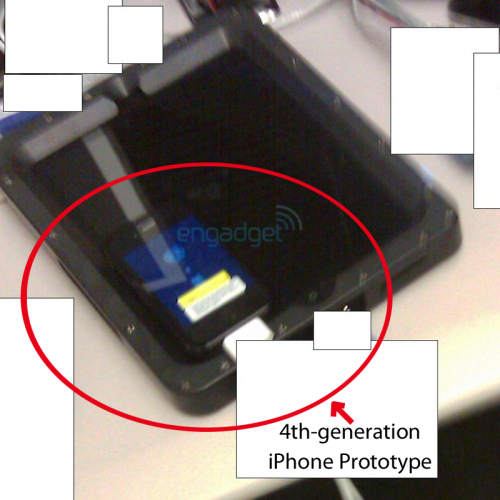
Apple 4th-gen iPhone prototype in front of us all along?

You may be wondering why we’re reposting one of the leaked iPad prototype photos that drummed up excitement prior to the Apple tablet’s launch. Well, according to Apple Insider’s sources – with “an impeccable track record in matters such as these”, no less – the handset we all overlooked in favor of the iPad is, in fact, one of Apple’s fourth-generation iPhones.


Close-ups of the photo don’t give away much, which is probably why the prototype wasn’t spotted despite the photos having been floating around for a week now. Apple Insider’s sources haven’t told them anything else about the smartphone, and nor have they revealed whether it’s seen here in a production casing or wrapped up like the iPad in the image.

If this is the final design, then Apple have either junked the chrome bezel or replaced it with a matte-finish version; still, with five months apparently left to run until the new fourth-gen iPhone launches, we’re leaning toward thinking it’s probably not the finalized design. The handset is expected to run another of Apple’s homegrown chipsets, a variant of the 1GHz Apple A4 powering the iPad.
Read More

Saturday, January 30, 2010

iPad UI gets ported to the iPhone and iPod touch


At this particular point, 50-something days away from the earliest iPad deliveries, we doubt too many people are up in arms about the iPad's ability to act as a jumbo iPhone. On the other hand, if we told you you can take pretty much the entire iPad experience and distill it down to your iPhone OS device, well you'd probably care a lot more, wouldn't you? To get that extra 3D flavor to your UI, including the fetching iBooks shelf and other iPad-specific touches, you'll need a jailbroken iPhone or iPod touch, access to the Cydia app store, and the manpower to click past the break for the full instructional video. Come on, you know you want to.

Read More

Friday, January 29, 2010

Hang on, where’s iPhone OS 4.0?

Many of the iPad rumors we heard in the run-up to yesterday’s launch turned out to be false – OLED displays, dual cameras and solar panels all come to mind – but one of the suggestions that had sounded reasonably believable was that the tablet would run iPhone OS 4.0. Last we heard, tipsters suggested that Apple had been sitting on the launch of the updated platform since it contained too many mentions of the iPad, something that would tip developers (and thus the press) that the nigh-legendary tablet was on its way.

So it came as some surprise to discover that the iPad demo units Apple brought out yesterday were all running iPhone OS 3.2, the same platform as is currently found on the iPhone 3GS and iPod touch. No sign of all OS 4.0, or any of the benefits – multitasking being the heavily hinted one – it’s expected to bring. My thought at the time was that, in an attempt to keep the focus on the iPad rather than prompt questions about the state of the iPhone, Apple would announce and most likely release OS 4.0 in the interim period between now and the iPad shipping.

When I made that suggestion on Twitter in the aftermath of the Apple announcement, a few people queried why the company would go to the effort of adding iPad support to iPhone OS 3.2 if they were only going to update it to OS 4.0 by the time it launches in roughly 60 days time. That’s certainly a good question.

Of course, if I were Apple, I might be tempted to load up the latest reasonably-stable version of OS 4.0 onto the iPad demo units I was bringing with me to the keynote, doctor the version number so as to raise no eyebrows about the difference between what’s current on the iPhone right now, and lock down anything that differed from what users expect from the smartphone experience. That way I could quietly continue beavering away in the background, preparing for an iPhone OS launch event at some point between now and the iPad’s arrival.

OS 3.2 – or whatever was running yesterday – for the iPad certainly shows some signs of being cobbled together. The mention of importing photos into Keynote from the non-existent camera is a good example. I don’t want to sound like a conspiracy theorist, but a reasonable explanation is that the code the prototypes were running is unfinished; is it too much of a stretch to wonder whether that unfinished code is really the version its About page suggested?

Launching iPhone OS 4.0 between now and the iPad’s sales debut would not only give the iPhone an injection of fresh juice before the predicted fourth-gen model expected at some point over the summer, it would also give Apple a second shot at iPad “first impressions”. Yes, previews and hands-on articles from this week criticized the absence of multitasking, Apple might say, but since then OS 4.0 has delivered that and more: all of those reasons not to buy an iPad, well, they need to be reconsidered. A lot of this is definitely wishful thinking – without the ability to run multiple apps at once, and switch between them easily, I don’t think an iPad figures on my shopping list any time soon – but considering some of the things we’ve heard about Apple’s tablet, a little conspiacy theorizing doesn’t seem especially out of place.
Read More

Fring iPhone App Allows Skype Calls over 3G


Yesterday a change to the iPhone SDK allowed for VoIP over 3G and we heard about the first app which'll offer the functionality. Today another iPhone app, Fring, has begun allowing video and voice calls using Skype over 3G.

You don't need to update your version of the Fring app as it was simply a matter of Apple lifting some restrictions on its end. You can now freely make Skype calls without being connected through Wi-Fi—assuming you've got decent reception.

Still no word on when we'll get an official app from Skype though.

[Fring via Pocket Lint via Engadget]
Read More

Thursday, January 28, 2010

iCall VoIP now available over 3G on iPhone/iPod Touch, possibly on iPad?

An update to the iPhone developer SDK now enables Apple iPhone and iPod Touch users to make VoIP calls over cellular networks. The application, dubbed iCall, is the only one in the Apple App Store at this current moment that can allow for VoIP over 3G connections.

The other obvious question at the moment is, will the iPad be equipped with this feature? Apple’s newly announced tablet has app support, 3G, Wi-Fi, microphone, and speaker, all that’s needed for VoIP calls. If so, then the iPad may truly lives up to its hype as an “oversized iPhone”.
Read More

Tuesday, January 26, 2010

Google Voice comes to iPhone and webOS, as a web app

Remember the dustup last summer over Apple’s rejection of the Google Voice app for the iPhone? Everyone was pointing fingers and even the FCC got involved. Michael was so upset that he quit the iPhone rather than give up his Google Voice. Well, now he can come back because Google Voice is finally on the iPhone via its browser, and Apple can’t really do anything about it..

Google Voice will become available today for both the iPhone and Palm Pre/Pixi via a new mobile Website which will go live later today at http://m.google.com/voice. The new Google Voice mobile site shows your inbox with transcribed calls, which you can play from the browser. You can also send SMS messages or dial from the browser. The application ends up making a local call through your cell phone to Google Voice, which then routes your call through its own lines. When someone gets the call, they see your Google Voice number instead of your AT&T number. And when you get a voicemail, a notification even pops up on your iPhone with the transcribed message (through SMS).

It is built on HTML5 with most of the functionality of the original iPhone app, except that it cannot access the local contact list in your iPhone’s address book. It lets you manage a separate Google Voice contact list which is kept in the cloud instead. Google Voice voice routes your calls through its servers and acts as a new hub through which you can manage calls and forward them to various phones. You can also manage your settings and various phone numbers. The HTML5 makes it very fast, allows for local caching of data, and supports the voice tags necessary to play the audio voicemails through the browser.

Mobile apps like Google Voice really show what can be done in the browser and point to an alternative way to build sophisticated apps for the iPhone without going through the gatekeepers in Cupertino. VoiceCentral, one of the third-party Google Voice apps that was also pulled from the App store, created a similar browser-based version of Google Voice for the iPhone. Both of these apps went the browser route because they didn’t have any other choice, but you can hardly tell them apart from regular apps. Once mobile phones allow access to deeper phone functions such as the local contact list from the browser, there will be even less reason to create a device specific app. The Web, after all, supports many different platforms. With a few tweaks to the UI, the mobile Google Voice site also works on Palm phones.


Read More

Monday, January 25, 2010

Apple’s iPhone coming to all major US carriers (Verizon, Sprint, T-Mobile) this year?

We’ve been hearing lots of rumors about a possible iPhone launch via Verizon and even via T-Mobile USA, but now it’s the first time (as far as I know) when an analyst predicts the launch of Apple’s smartphone via all major US carriers, including Sprint.


Bloomberg has it that Oppenheimer & Co analyst Tim Horan expects the iPhone to hit T-Mobile first, sometime in the summer of 2010. After that (in the fall) Verizon and Sprint will have their own iPhones, too – obviously coming in CDMA flavors. Reportedly, Clearwire will also introduce the iPhone in 2011, which means Apple plans a WiMAX version of the handset.

All this will be possible as AT&T is about to lose the iPhone exclusivity in the US.

Most probably, AT&T, Verizon, Sprint and T-Mobile will all launch the 4th generation iPhone, expected to be unveiled by Apple this summer (coming with features that might include an AMOLED touchscreen display, touch-sensitive case, video calling, and a 5MP autofocus camera).

Meanwhile, Apple announced its financial results for the first quarter of fiscal year (FY) 2010, ended December 26, 2009. The company’s revenue for said quarter was of $15.68 billion, while the net profit was of $3.38 billion. Quite impressive.

8.7 million iPhones were sold in the quarter – not as much as expected, but still double the amount of units sold in the year-ago quarter. The company has also sold 21 million iPods (interestingly, that’s 8% less than in Q1 FY 2009).

In the press release announcing Apple’s results, Steve Jobs reminded us that they’re going to release something new this week, on January 27:

“The new products we are planning to release this year are very strong, starting this week with a major new product that we’re really excited about.”

Major new product – most probably, that’s the Apple iTablet / iSlate / whatever its name is.

Apple fans, rejoice, because it looks like something really nice is coming your way.
Read More

Sunday, January 24, 2010

AT&T rumored to lose iPhone exclusivity this Wednesday?

“But it’s tied down to AT&T…” Those may be words that you’ll never hear again when it comes to the iPhone. Now, it’s not written in stone just yet, but one of Hot Hardware’s inside sources feels very confident that AT&T will lose its iPhone exclusivity during Apple’s big announcement this week. If this is true, coupled with an announcement / beta release of iPhone 4.0, Apple’s iPhone sales could skyrocket — especially since some people have avoided the iPhone like the plague strictly because of AT&T. Where will the iPhone go? Will there be an unlocked version available? We’re not quite sure, but we’ll find out soon as it’s shaping up to be a big week for Apple with a tablet announcement, iPhone 4.0 and now possibly the iPhone may finally be unshackled from AT&T’s grip. One thing to consider, however, is that if AT&T loses its exclusivity this Wednesday, who’s going to want to buy an AT&T-locked iPhone until the next generation model comes out? That alone gives us some doubt.
Read More

How would no iPhone exclusivity affect Android?

On the same day the iPad is unveiled, it sounds like Apple’s exclusivity deal with AT&T may be expiring. If true, I can imagine Steve Jobs making this an important part of his announcements on January 27th:

“I’m excited to announce that starting today, the new iPhone will be available for any carrier in the United States to sell.”

What does this mean for Google though? One advantage of Google’s Android strategy is that it’s not limited to only one carrier — it’s available where the iPhone isn’t, and so far, that has worked alright. On the other hand, I don’t believe they have tapped the potential that exists outside of AT&T.

On Wednesday, Android may be directly competing with the iPhone. The question is what percentage of people who want to buy an iPhone has already left their carrier and moved to AT&T, and how many are looking to jump ship as soon as possible from the carrier.

Considering the Nexus One flop (some say only 20,000 units sold on the first week), it will be interesting to see how no exclusivity for iPhone could make it even more difficult for Android to gain momentum.

If the non-exclusive thing happens, what do you think Android’s future looks like?
Read More