Showing posts with label Google Nexus One. Show all posts

Sunday, February 14, 2010

Is Google moving too far (from search) too fast?

Google should diversify, analysts say, but risks losing focus

Google Inc. is stuck between something of a rock and a hard place.

The company, which rose to prominence and fortune on the basis of its highly popular search service, has been expanding out from its core business at an increasingly swift rate -- and in a growing number of directions.

That expansion has some analysts wondering whether Google is in danger of losing focus on what made it such a profitable company, even as those same analysts say it can't rely on search as its only avenue for making money. Right now, Google relies on search for 95% of its revenue, according to Karsten Weide, an analyst at IDC.

"Google has the problem of too much money and not enough control over what to do with it," said Rob Enderle, principal analyst at Enderle Group. "As a result, they are building complexity at an alarming rate, and that complexity should eventually choke them, much as it did Microsoft.... It isn't that each project isn't important. It's that they often don't dovetail well and should eventually result in a company that is unmanageable."

"I think they are a little scattered," said Weide. "They are doing a whole lot of things, and I think a little more focus could not hurt.... But this is a market where you can't afford to sit on your hands. You have to look at what's going on and what is new and what is coming up. Basically, you're betting money."

Last summer, Google announced that it was developing an operating system called Chrome OS. Then in September, it released its Google Wave collaboration tool, taking another step away from its search roots.

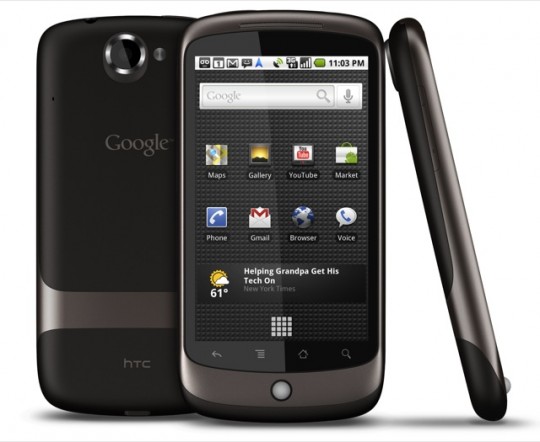
And then earlier this year, it unveiled the Google-branded and -designed Nexus One mobile phone.

And this week, Google picked up the expansion pace quite a bit. On Tuesday, it took a major swing at social networking sites like Twitter and Facebook when it unveiled its Google Buzz upgrades to Gmail that make it more of a social networking hub than just an e-mail service. Google Buzz is aimed at helping users better find the most important information contained in their flood of social posts, pictures and video.

The company followed that with an announcement that it plans to build what it calls ultra-high-speed broadband networks in some parts of the U.S. Finally, yesterday, Google announced that it's buying Aardvark, a social search company.

Weide agreed with Enderle that Google has so much money in its coffers that it can try new projects and venture into new areas.

The problem, though, is that undertaking so many new projects can, over time, strain a company's finances and cause executives to lose focus.

"I think they're so rich it doesn't really matter at this point," said Weide. "IBM has been there and Microsoft has been there -- even AOL and Yahoo were there. They were so big, they just didn't care. And everybody has their comeuppance. It will happen to Google eventually. Everyone has their time. You want to be wise in what you do, and prudent. And you don't want to be all over the place."

Stuart Williams, an analyst at Technology Business Research, said Google is on a positive track, trying to pull in revenue from new sources. And that, he added, is a good idea.

"These [moves] all surround Google's efforts to expand its total available market and to seed new markets for growth," said Williams. "Google's strategy is to expand outward from search to include more of the software, hardware and devices that either drive or enable search and information.... Increasingly, Google will need to focus on operations and the execution of its initiatives."
Read More

Tuesday, February 09, 2010

Some Good News, and Some Bad News, About Adobe Flash 10.1


The good news first: Adobe's promising Flash 10.1 is going to hit smartphones—Android, WebOS, Windows Mobile—and desktops in the "first half" of this year, a slightly less squishy date. And it'll come over the air. The bad part?

Well it's bad for Android, anyway: You're gonna need Android 2.1. At least. Because it provides some access Adobe needs to make the Flash magic happen. So, sorry everything but the Droid and Nexus One, at least for the moment. The "over the air" thing is also kind of "up in the air" as to what that means: It could come from your carrier, it could come from your phonemaker, or failing all else, it could come from Adobe. Which means, Flash isn't necessarily going to hit your phone at the same time as everybody else's. Depends on your phone. But, they're betting that over half of smartphones—53 percent—will have Flash Player by 2012. Not surprisingly, Adobe says Flash 10.1 is going to be all over some tablets, too, with accelerated performance on Nvidia's Tegra 2, Qualcomm's Snapdragon (like what's in the Nexus One), and Freescale's i.MX515.

Lastly, Adobe would like you to know that this whole Adobe vs. HTML5 thing is silly, since they totally support HTML5, like all web standards. They love them some web standards, they say. But! They would also like you to note that HTML5 standardization is years away, and Flash works right now. And the reason you notice crappier performance on the Mac is sorta the Mac's fault, they say, because they need more access to APIs and they get half-assed crash reports. Plus, Adobe claims, apps tend to run faster in Windows than OS X generally, because performance is about 20 percent worse using OS X's GCC compiler, not to mention performance varies even within an OS, since Flash runs 20 percent faster in IE8 than Firefox, for instance. Either way, performance will be better on Mac with Flash 10.1, since it's shifting over to using CoreAnimation.

Okay, you can resume your "death to Flash!" chants now (even though it's not going anywhere for a while, people!).

[Adobe]
Read More

Monday, February 08, 2010

Google Nexus One Launches Phone Support, Lowers ETF By $200

Since the launch of the Nexus One, early adopters have likely had one question lurking in the back of their minds: who to take the phone to if it broke. You see, when the phone was first launched, Google was directing people to either T-Mobile (Google’s carrier partner) or HTC (the device manufacturer) depending on the problem, which could lead to an endless circle of hold times and few results. Today, Google has just rolled out its solution: it’s launching its own phone support line specifically for Nexus One customers. Call 888-48-NEXUS (63987) and within a few minutes, you’ll be talking to a real live Google support tech (the line is open from 7AM to 10PM EST).
This is, of course, a fairly major departure from Google’s standard protocol of making it incredibly difficult to reach anyone for phone support for most of its products. It doesn’t come as a total surprise though — last week there were reports of a Google job listing for “Phone Support Program Manager, Android/Nexus One” to be based out of its headquarters in Mountain View, CA.

The news was first reported at TMO News, and we’ve gotten a response from a Google spokesperson explaining the company’s logic behind the support number:

By design, we focused initially on providing the best possible customer support through our on-line channel, and our experience in the four weeks since the Nexus One launch enabled us to significantly enhance that on-line support offering. We have been able to address a large majority of customers’ inquiries successfully through on-line support, in combination with phone support from our partners, HTC and T-Mobile. That said, our approach with our new consumer channel is to learn fast and continue to improve, and we have, therefore, also been developing our capabilities to provide a number from Google, 888-48-NEXUS (63987) for live phone support for the Nexus One. Live phone support from Google, combined with an optimized on-line support experience, enables a superior Nexus One customer experience.

In other words, Google probably would have liked to have gotten away with online-only support, but it quickly became clear that wasn’t going to cut it.

In other news, Google has also announced that the ETF charge for the phone is down to $150 from $350. But that’s still on top of T-Mobile’s $200 fee. The drop may have well been spurred by the ETF inquiry recently launched by the FCC.
Read More

Sunday, February 07, 2010

Linus Torvalds: Google's Nexus One First Mobile Phone I Don't Hate

Linus Torvalds, the inventor of the Linux kernel, has an absolute disdain for mobile phones. All of the ones he has purchased in the past, the man writes on his personal blog, ended up being "mostly used for playing Galaga and Solitaire on long flights" even though they were naturally all phones run on open source operating systems.

Things have changed now, he adds, now that he has caved and bought Google's Nexus One a couple of days ago.

Torvalds has owned a number of phones before, including Google's G1 device and 'one of the early China-only Motorola Linux phones', but it took for Google to add multi-touch capabilities to the Nexus One before he finally broke down and bought one from the company's web store.

And he's loving it:

But I have to admit, the Nexus One is a winner. I wasn't enthusiastic about buying a phone on the internet sight unseen, but the day it was reported that it finally had the pinch-to-zoom thing enabled, I decided to take the plunge. I've wanted to have a GPS unit for my car anyway, and I thought that google navigation might finally make a phone useful.And it does. What a difference! I no longer feel like I'm dragging a phone with me "just in case" I would need to get in touch with somebody ¿ now I'm having a useful (and admittedly pretty good-looking) gadget instead. The fact that you can use it as a phone too is kind of secondary.

While Google hasn't disclosed how many phones it's sold so far, the company is believed to have sold closer to 100,000 than 1 million devices. But at least one of them made one of the most famous software engineers in the world one happy camper.
Read More

Thursday, February 04, 2010

Hey, Google! Why No Multitouch for the Droid?

History will note that Steve Jobs was right: Google can be evil. And what it's doing to Android is a case-in-point.

Only Nexus One customers are getting new multitouch features, all you Droid customers are just out of luck.

Multitouch was one of several updates to its Nexus One smartphone that Google released Wednesday. The company did not provide the update to other top-tier Android smartphones, such as the Motorola Droid.

CNET reported that Google is blaming the feature disparity on the difference in processor speed between the two handsets. Yesterday, my former CNET colleague, Molly Wood, offered wonderful details on how Android is being undercut by Google.

The Droid supposedly doesn't have the necessary horsepower for touchscreen gestures, such as pinching to zoom. But, how does that explain that the European version of the Droid already has multitouch?

As do other less-powerful handsets, such as the Palm Pre and Android-based HTC Hero.

Maybe this is all just a misunderstanding and the Droid will soon gain feature parity with the Nexus One. But, I'm not holding my breath.

It looks like Google led Motorola down a path that resulted in the Droid and then decided to take Android semi-proprietary by introducing its own handset, the Nexus One. Now Google is adding a key feature to the Nexus One that the Droid may never get (at least in the U.S.).

If that isn't evil, well, it's certainly not a way to manage a platform you expect to receive wide industry support.

Google should be uniting the Android platform, not fragmenting it.

That may not, however, be what Google sees as its best interest. Now that it has phones to sell, it may turn out that the most current Android will only be available on Google-branded devices.

Droid customers: If you feel like Google has jerked you around, you're probably right. Make a statement: Start using Bing.

This is not the first time I've wondered whether Android will survive fragmentation as each vendor tugs the open-source operating system in its own direction.

Having so many different versions (1.5-2.1) of the OS available simultaneously doesn't help the Android brand. Watch for the soon-to-be-released Motorola Devour, a throw-back to Android 1.6, to further muddy the waters.

Because Google isn't willing to exercise control over Android, customers can have no expectation that different Android phones will have the same features or even run the same applications. That Google is seemingly willing to toy with key partners, such as Motorola, only makes this worse.

Google ought to require that all new handsets must be released with the then-current version of the operating system. That alone would go a long way toward making Android a meaningful brand for consumers (and developers).

What's happening now is just the opposite.

Android means different things on different phones, and even the most current models--the Droid and Nexus One--can be significantly different. This would seem to undercut applications development and certainly makes it harder to purchase an Android handset.

Unless, of course, you purchase the Google-branded model, which presumably will now always and forever be ahead of anyone else's Android devices. So much for the supposed wonders of open source.

If this is how Android is to evolve, the iPhone has nothing to fear.
Read More

Tuesday, February 02, 2010

Did Google Just Multi-Punch Apple In The Face?

As great as Android phones are getting, there has been one major feature lacking that users have complained about: multi-touch. Yes, some third-party apps have been free to use it on certain devices, but the best Android apps, those made by Google, have all lacked it.

Until now.

With the Android update announced for Nexus One phones today, Google has enabled multi-touch for its Browser, Gallery, and Maps applications. Specifically, they’ve enabled the popular pinch-to-zoom functionality that iPhone users are fond of.

So why did Google wait all this time to implement this obvious feature when its devices have been capable of it since the G1? Well, a report last year (written by me for another publication), cited a source within Google who noted that Apple and Google had a gentleman’s agreement that Android wouldn’t encroach on what Apple believed to be its property, certain multi-touch gestures, like pinch-to-zoom. With Apple and Google now fighting, all bets are apparently off.

Android chief Andy Rubin has said that there was no conspiracy about multi-touch, and suggested the Google apps haven’t implemented it simply because he didn’t like the functionality too much. But given that just about every Android user disagrees with him, that statement seems suspicious, at best. And why the change of heart now? And why does it happen to coincide with a time that Apple and Google are clearly at odds with one another?

While the two used to be just about as close as two companies can be, sharing two board members, one of whom was Google CEO Eric Schmidt, things have turned sour as the two are increasingly competing in various fields. This led to Schmidt resigning from Apple’s board last year, and since then things have gotten more sour. While the whole Google Voice not being allowed onto the iPhone situation was one thing, Steve Jobs reportedly made recent remarks that Google’s Android team was out to destroy the iPhone (as well as other disparaging remarks about Google).

And the battle continues on — those new Chrome OS tablet mock-ups are clearly envisioning multi-touch usage, just like Apple’s new iPad.

Apple and Google also apparently used to have a gentleman’s agreement not to poach each others workers, we reported in August. But again, with the situation between the two deteriorating, that is apparently off now as well.

And Google may have another reason to be okay with implementing multi-touch now: the Palm Pre. Since its launch last year, webOS (the OS that runs on the Pre and other new Palm devices) has allowed for native multi-touch, including pinch-to-zoom. While Apple has made some thinly veiled threatening comments about protecting their IP, they have so far not sought any legal action against Palm for this. Microsoft’s new Zune device uses similar multi-touch functionality too. Maybe Google now believes that Apple is not going pursue legal action against the use of this, despite their many multi-touch patents.
Read More

Nexus One Gets a Software Update, Enables Multitouch (video)

The iPhone isn't the only handset getting bumped today -- Google's just outed a very, very significant update to the Nexus One that includes Google Goggles on board and a re-upped version of Google Maps that includes suggestions and a dedicated night mode. Much more significantly, though, they've capitulated and enabled multitouch in Browser, Gallery, and Maps -- great news and a big win for the Android community at large. Finally, there are some 3G improvements in there, but you might have to wait a bit -- Google expects to have it rolled out to pretty much everyone toward the end of the week. Seriously though, now that we've gotten that whole multitouch spat cleared up, it's time for Engadget to rally around something else: ridding the world of tiny ninjas, perhaps? Follow the break for a video of the new firmware -- in all its multi-fingered glory -- in action!

ReadWriteWeb's gotten an official statement from Google on the question on everyone's mind: why now? The company says that Android 2.1 "powers a new class of devices" with more horsepower and bigger displays, and "based on these new capabilities and numerous requests from Android users, we decided to provide pinch-to-zoom capabilities with this new over-the-air software update for Nexus One devices." This sounds like a total cop-out to us -- HTC got multitouch working just fine on the Hero way back on 1.5 -- so we still think they just got uncomfortable with the noise surrounding the groundswell of demand for it. Of course, that's fine by us -- power to the people, right?

Read More

Friday, January 29, 2010

Nexus One for AT&T's 3G bands likely in the works

By all appearances, Google's trying to break Android free of the surly bonds of the manufacturers and carriers that support it, opening its own online store and selling unlocked Nexus Ones to anyone willing to pony up the $529. Problem is, the Nexus One as we know it today is only available in a configuration that supports North American 3G on AWS spectrum, meaning you've got to go with the States' fourth-largest carrier if you want to blaze -- you've got no other option. That's not very "open," is it, Google?

That brings us to an FCC finding today. Take a look at the two labels above; the one on the right comes from the current Nexus One. The label on the left, meanwhile, is physically identical and comes from a new filing for a device with FCC ID NM899110. The old Nexus One has ID NM899100, so this new device is just a single digit off -- likely a variant of the existing model. If you look into the RF reports a bit, you'll immediately notice that the new handset supports 3G on WCDMA Bands I, II, and V, meaning that it'll work on AT&T (and Rogers, Bell, and Telus for the Canadians in the room) along with most of Europe. Same label style, nearly identical model ID, different bands -- we think we know what's going on here. Google, your move.
Read More

Tuesday, January 26, 2010

Google blames T-Mobile for Nexus One 3G woes ; On Walmart Soon

Google’s first direct to the customer Android phone, the Nexus One, has had its image tarnished a bit with many users reporting significant 3G woes when using the handset. Both Google and T-Mobile have been investigating the issues.


Google has completed its research into the issue and is laying the blame at the feet of the weak 3G network ran by T-Mobile. A bug was also found in the software of the handset during the investigation and a fix is incoming to address the issue.

The fix is said to be coming as early as next week. The grain of salt with this one is that some users are reporting that a T-Mobile G1 sitting beside the Nexus One can connect while the Nexus can’t. It’s hard to blame a poor network when you have two devices using the same network and only one can’t connect.

Nexus One “coming soon” to Walmart Wireless

Analysts blamed Google’s comparatively lackluster first-week Nexus One sales on the Android 2.1 smartphone only being available through their online store, but all that could be changing. A Walmart Wireless product page for the Nexus One has been spotted, suggesting that the smartphone is “Coming Soon”.


Unfortunately there’s no indication of when “soon” might be, though you can leave your email address and have Walmart Wireless get in touch when the Nexus One is approaching. Although we’ve seen prematurely-posted product pages before, Walmart’s is particularly comprehensive in this case; that’s leading us to believe that this hasn’t been posted in error.

No word on whether the Walmart Wireless Nexus One will be an online-only deal or available in-store – hands-on experience with the smartphone would do a lot to boost its everyday awareness with consumers – but we’re hoping the latter.
Read More

Saturday, January 23, 2010

How Google's Nexus One censors cuss words

Some of you who have been basking in the beauty of your new Nexus One Googlephone may not have tried out all of its delightful features.

And what I am about to tell you may lead you to utter some naughty words. Please, go ahead. I have heard them all, in several different languages. And I respect the vehemence of the vernacular.

However, your Nexus One will not be so charmed by the vigor of your tongue. It will, dare I utter the word when referring to a product from the newly emancipated Google, censor you.

You see, the pungently polite people at Reuters were playing with their Nexus One when they noticed something about its built-in voice-to-text feature.

Every time they said something naughty into the phone, the naughty word came out as "####"--and not just "f---." It even censored the "S" part of BS.

Reuters immediately called Google and screamed at them: "What the #### are you miserable ############# playing at?"

Oh, perhaps I have stretched the boundaries of possibility with that heartening notion. They probably asked a little more politely, given that they secured a really quite ingenious reply from a Googleperson.

Apparently, the censorship is not because Google is trying to clean up the world and turn it into the nicest parts of Alabama. No, the company is worried about what might be transcribed.

"We filter potentially offensive or inappropriate results because we want to avoid situations whereby we might misrecognize a spoken query and return profanity when, in fact, the user said something completely innocent," Google told Reuters.

Yes, the technology isn't quite perfect, so even the potential of a misplaced curse is being avoided at all costs.

What interests me most is how Google chooses its list of naughty nuances. Is there some poor engineer over at the Googleplex whose sole task was to write software that immediately identifies expletive expressions? Do they take account of those who swear in Spanish, Italian, or, like me, Polish?

And if you say "For crying out loud" a little too quickly, might the transcription come out with a four letter f-word (or rather four hash marks) at the beginning?

One other thing. I have a Croatian friend. If I ever got a Nexus One, I would like to be able to address him by his name. His name is Fuk. Would his name be transcribed, every time, as ###? How sad.
Read More

Friday, January 22, 2010

Hacker Enables Multitouch on Nexus One Browser

The Google Nexus One has drawn some criticism for its lack of multitouch support, especially as the omission seems to be arbitrary. But the allowed a hacker to enable multitouch capabilities on Google's flagship device.

Cyanogen, a celebrated hacker in the Android community, released a modified version of the Android 2.1 OS that enables multitouch features for the Nexus One smartphone. The hack enables multitouch in the native Web browser only, but Cyanogen said he would be adding this functionality to other apps soon as well.

It's not exactly clear why the Google Nexus One does not feature multitouch capabilities. Some blame it on Apple, which reportedly owns the rights to the technology, while some reports speculate that Apple and Google have a gentleman's agreement that Google won't enable this feature.

In comparison to the Apple iPhone, the Nexus One is noticeably missing multitouch features such as pinch-to-zoom in the Web browser or Maps and for the software keyboard. However, the multitouch hack for the Nexus one enables pinch-to-zoom in the browser and paves the way for gesture use in other apps as well.

The software hack to enable multitouch on the Nexus One can be downloaded from here, and install instructions are here. Before you start, Cyanogen warns that you will lose your bookmarks and browser settings, so it would be a good idea to back up first. As a little reminder, hacking your phone might result in voiding your warranty.

To get a taste of how the multitouch hack would work with the Google Nexus One's default browser, check out the video below:

Read More

Friday, January 15, 2010

Droid more valuable than Nexus One or iPhone 3GS according to iSuppli

If teardowns are guilty titillation for the geek who likes to see must-have gadgets stripped to their component parts, iSuppli’s versions are the respectable analysis that leave us believing we’ve actually learned something important afterward. Latest across their bench is the Motorola DROID, and iSuppli reckon the Android smartphone costs Moto $179.11 in parts and a further $8.64 per handset to manufacture.


Interestingly, the most expensive component iSuppli found is the DROID’s 16GB microSD card, which costs $35 apiece. That’s followed by the pretty marvellous 3.7-inch LCD TFT display, at $17.75, just edging ahead of the capacitive touchscreen layer at $17.50.

There’s at least one surprise inside, too, in that Motorola have apparently used a camera autofocus module with a mechanism so-far unseen by iSuppli. They reckon it could use bimetallic strips – which flex when heated – rather than the more common voice-coil actuation of other such modules.
Read More

Thursday, January 14, 2010

Google Cuts Nexus One Upgrade Price by $100 (and Refunds Early Adopters)

Angry T-Mobile customers have complained about the exorbitant $379 upgrade price for the Nexus One, and Google just responded by lowering that price by $100. Plus, they're sending out refunds to the poor souls who paid the higher price.


Those who paid $380 will get a rebate in Google Checkout within two weeks, according to this internal memo. So, as a tally, here are the current prices:

- $530, unlocked
- $280, T-Mo customers eligible for upgrade
- $180, with a new 2-year contract

Good to see Google responding so fast—now if only they'd work on their customer service issues (and bring the phone to Verizon already!) they'd really have something.
Read More

Wednesday, January 13, 2010

Google sell 20k Nexus One handsets in first seven days?

Google’s Nexus One has only been on sale for just over a week, and unsurprisingly the search giant aren’t being especially forthcoming with sales figures quite yet. That hasn’t stopped mobile application analytics company Flurry from sticking their collective neck out and estimating around 20,00 of the Android 2.1 devices had been sold, and contrasting that with first-week Motorola DROID sales of 250,000 handsets and iPhone 3GS sales of 1.6m handsets.


Flurry uses its partnerships with mobile app developers to compile its usage figures, claiming to monitor more than 10,000 Android and iPhone devs and the penetration of their software. That way, it can also track new devices making an impact on its database, and thus make educated guesses as to how many new Nexus One handsets were in-use.

The company is blaming the comparative sales shortcomings on minimal publicity (in the traditional sense) by either Google or T-Mobile USA, the company’s initial carrier partner. In contrast, the T-Mobile myTouch 3G, Verizon DROID and AT&T iPhone 3GS all had significant marketing campaigns.
Read More

Vodafone’s Nexus One to cost €150 on contract

We’ve already heard that the on-contract price of Google’s Nexus One for Europe might be under €200, and it looks like this is true.


A new leaked document shows that Vodafone Germany will sell the Nexus One for €149.90 with a contract agreement (presumably for 2 years), so we should expect the smartphone’s price to be similar in all the markets where Vodafone plans to offer it.

As seen in the image below, the €149.90 price is comparable with the prices of Nokia N97 Mini and LG BL40 Chocolate.

Just for the record, the Motorola Milestone (aka Droid), which was considered the best Android smartphone until the Nexus One, costs only €99.90 with a Vodafone Germany contract.

According to previous reports, the Nexus One should be available for Vodafone starting the next few weeks, although an exact release date is still not known.

For the moment, the sales of Nexus One don’t seem to bee that great (about 20,000 units have been sold), but Vodafone and Verizon will probably change this.
Read More

Tuesday, January 12, 2010

Why Google will win the smartphone race: Products in the pipeline

In the end, Google and Android will own the smartphone market. It won’t happen this year and it may not even happen in 2012 but the day is coming when Android becomes the de facto standard for smartphones.

This we know: Multiple manufacturers have reported that Android phones are on the way including up to five from Motorola this quarter and a number from Samsung this year. Google also has a number of handsets in for testing and should be rolling them out after the Nexus One.

While product in pipeline is also nice, I think the real value is in the software. At CES we saw Dell and Lenovo releasing Android phones running Android but without – and this is important – major Google branding or applications. This is, in the end, why Android will soon rule the roost: carriers can remove functions as it sees fit, thereby creating entirely new versions of the OS and UI for their own purposes.

The only problem? Google’s control of the OS pipeline. Various sources have complained that Google controls which OS version various manufacturers are allowed to use and the result is a segmented market with potentially fractured OS trees. However, in the end, the carriers and the manufacturers have control over the OS.

What’s going to happen to also-rans like Windows Mobile? I suspect manufacturers will roll mobile features into future desktop/laptop OSes, leading to a convergence of functionality for mobile Windows devices into Windows 7. Why have a dumbed down Windows Mobile when most devices are powerful enough to run a version of Windows 7? Microsoft is not out of the game, but as a mobile OS provider their days are numbered.
Read More

Google charges additional ETF if you cancel contract early

Start sharpening your picks and dipping those torches in oil, I feel a riot coming on. You know those long contracts that we all get when we buy mobile phones and never read? The contract for that shiny new Nexus One from Google will bit some in the arse.

Phandroid reports that someone who actually perused the contract in detail has noticed the fact that Google will hit your credit card for the full purchase price of the Nexus One is you cancel with the carrier early. That is $529 for those who don’t know.

The real rub is that the cancellation fee is in addition to any early termination fees from the carrier. I am not sure what gives with the extra ETF Google is looking to charge, but I am sure the swift and strong backlash this will cause will reveal more details in the coming days.
Read More

Monday, January 11, 2010

Google to sell 5 to 6 million Nexus One phones this year?

We don’t know how many Google Nexus One superphones have been sold until now (almost one week after launch), but the handset certainly has what it takes to become a commercial hit – since Google itself is selling and advertising it.

Barclays Capital analyst Doug Anmuth believes that Google might sell 5 to 6 million Nexus One units in 2010 only, which would make the handset the best-selling Android device until now.

And while 5 to 6 million units is still far from the Apple iPhone’s projected sales for 2010 (more than 30 million units), it’s definitely an impressive number – it’s about half the projected phone sales of Motorola and Sony Ericsson for this year.

Knowing that the Nexus One costs $530 free of contract, Google might cash in at least $2.5 billion – if it will indeed sell 5 million phones. Of course, Google’s net profit would be just a (small) part of the $2.5 billion, and it would also be shared with HTC (which actually builds the smartphone).

With the Nexus Two sort of confirmed by Andy Rubin, it looks like Google and its Android OS are on a roll. It should be interesting to see which mobile OSes will be hit harder by Android. iPhone OS? Maybe, a bit. Symbian? Probably. Windows Mobile? Most certainly, especially if Microsoft will delay Windows Mobile 7 to 2011.
Read More

HTC admits customers have Nexus One 3G trouble, not yet blaming the phone

If samples from customer support threads are an accurate indicator, hundreds and perhaps thousands of early adopters of Google's Nexus One phone aren't looking for humanity from some pinstripe or tapered edges, so much as from customer support.

A spokesperson for HTC, the manufacturer of the Nexus One phone sold by Google and deployed thus far on T-Mobile's GSM network, told Betanews late Monday evening that it is aware of the magnitude of 3G connectivity problems reported by customers nationwide since last week. As of Monday evening, several hundred messages were posted to Google's support Web site, many reporting essentially the same problem: For the most part, their 3G connections are spotty and variable; and for some, 3G is non-existent.

Contrary to reports, however, HTC is not acknowledging a problem with the phone. As of now, the T-Mobile network remains equally suspect, especially amid the complete lack of much news whatsoever, including to its customers, from Google.

"While the majority of Nexus One owners have been thrilled with their experience, HTC is aware that some owners have reported having some technical issues with their Nexus One devices," the spokesperson told Betanews. HTC, Google, and T-Mobile take all such reports very seriously, and are working closely together to determine what issues may be behind these reports."

Late Monday morning, T-Mobile's customer support site did include a thread started by support personnel, who appeared to be actively interested in collecting information on the problem. "Let's see what we can learn about this," the thread began. "Maybe we can uncover some commonalities among those experiencing issues."

But although blogs today reported that this thread was an admission of problems with T-Mobile's network, actually, T-Mobile made no such admission. It merely acknowledged the issue and its personnel (unlike Google's) are interacting with customers in search of a resolution.

Customers who did manage to get through to HTC support personnel report having been told that a software patch of some sort is in the works; some who received that message last week were told they would receive a patch as soon as today. It does not appear certain that such a patch, if it exists, specifically addresses this problem.

All that Google will say on the subject is as follows: "We are investigating this issue and hope to have more information for you soon. We understand your concern and appreciate your patience."

Nexus One is far from the first smartphone with 3G problems in the early going. The first US-based Apple iPhone 3G models were plagued with network trouble initially, as was the BlackBerry Bold 9000 -- both on the AT&T network. Early troubles with the BlackBerry Storm on the Verizon Wireless network were traced back to the phone.

Some information from Nexus One early adopters tends to point toward the network, not the phone, as the possible culprit. One fellow reports having swapped SIM cards with a friend with an iPhone, and immediately receiving faster 2G EDGE service from AT&T on Nexus One than 3G service from T-Mobile. Another customer who also owns a T-Mobile G1 noted similar 3G connectivity problems on both the G1 and the Nexus One, since last Tuesday when Nexus One was launched.

One story indicative not only of customers' problems but of their bewilderment over the lack of an obvious solution, comes from user scotty1024, who works in Redmond, Washington, just blocks from the Microsoft campus. "This morning I went into a conference room and no one else had shown up yet so I killed time in the Amazon MP3 store. The phone kept telling me it lost connection and to press here to retry. You'd retry and it would flip to Edge and I was able to pull up lists of titles. But about 2 minutes later it would flip back into non-working 3G and kill the connection. Spin, wash, repeat."

One would think, scotty1024 goes on, that the phone would be smart enough to route calls via Wi-Fi using Google Voice when 3G service goes dead.
Read More

Sunday, January 10, 2010

Google Phone Threatens Droid More Than IPhone

It’s a nice phone. OK, it’s a very nice phone.

But nothing about the new Nexus One smartphone from Google Inc. comes close to warranting the mass hysteria that attended its unveiling last week.

The Nexus One isn’t revolutionary. Nor is it an iPhone killer -- a phrase we should banish to the Tech Writers’ Hall of Cliches. It is, instead, a sleek phone with some advancements in display and processor technology that will surely be matched and then overtaken by others in the months ahead.

True, the rapidly evolving competition among Google, Apple Inc., Microsoft Corp. and Research in Motion Ltd. is fascinating to watch. And Google’s plunge into e-tailing -- the Nexus One can only be bought directly from the company over the Web -- has the potential to shake up how phones are sold.

Me, though, I find it hard to swoon over a business model.

The Nexus One, manufactured by Taiwan’s HTC Corp. to Google’s specifications, is similar in both size and shape to the iPhone -- a smidge thinner and lighter, a trifle longer. It runs a new version of Google’s Android operating system that makes modest tweaks to the software that debuted on Motorola Inc.’s Droid two months ago.

Thing of Beauty

If anyone ought to feel threatened by the Nexus One, it’s Motorola, which committed to using Android for all its smartphones and now has powerful new competition from its own partner. Just to cite one area, the Droid’s screen used to be my favorite: super-bright, with higher resolution than the iPhone. But the Nexus One uses new technology that provides an even richer display, with deeper colors and blacker blacks. It’s a thing of beauty.

Under the hood, the Nexus One uses a Qualcomm Inc. processor that’s the most powerful ever put in a phone. It also has enhanced 3-D graphics, expanded speech-to-text features -- you can now dictate your Facebook or Twitter updates rather than type them -- a replaceable battery and a memory-card slot.

At the same time, the Nexus One shares the shortcomings of previous Android and HTC phones.

The number of Android apps trails far behind the iPhone. So does Android’s ability to sync with Microsoft Outlook for e- mail, calendars and contacts, though the Nexus One does come with a version of DataViz Inc.’s Documents To Go software that lets you work with Microsoft Word, Excel and PowerPoint files.

Accidental Launches

Its app icons, which now whiz onto the desktop instead of rolling up window shade-style, are too small and close together; I too often accidentally launch an app when all I’m trying to do is scroll through them. The included 4 gigabytes of storage is too small and inflexible, with only 190 megabytes set aside for apps.

You can’t pinch your fingers together or move them apart to zoom in or out on a screen. The home, back, menu and search buttons below the screen require too much pressure to push, and the trackball seems superfluous except when it glows to signal a new call or message.

The company’s real innovation is in how it’s selling the Nexus One and the other Google-branded phones to follow.

Most phones in the U.S. are purchased tied to a specific carrier, which subsidizes the cost of the handset in return for your commitment to a service contract. Google is seeking to separate the handset from the service. You can buy it with a service plan for $179, or pay $529 and purchase service separately.

T-Mobile

At launch, there isn’t much of a choice: The only carrier currently offering a plan is T-Mobile USA, the U.S. mobile-phone division of Deutsche Telekom AG, which charges $79.99 per month. In theory, you can also use a SIM card from AT&T Inc., but the phone wouldn’t be able to use AT&T’s 3G network for data, only its older, slower Edge network. Outside the U.S., Google is shipping the unlocked Nexus One to the U.K., Hong Kong and Singapore.

The choices will multiply over time. This spring will see a Nexus One that runs on the Verizon Wireless network, which uses a different technology than AT&T and T-Mobile. Also in the spring, Vodafone Group Plc is lined up to offer a service plan for the Nexus One in Europe.

Google is responsible for delivering the phone -- the one I ordered on launch day last week arrived in less than 48 hours -- and will be the first point of contact if anything goes wrong.

Weakening the carriers’ control and compelling them to compete with each other may eventually put more power into consumers’ hands -- and, of course, Google’s.

While all this is interesting, it’s hardly earth- shattering. When Apple introduced the iPhone in 2007, it changed the entire way people thought about wireless devices, ushering in the era of the mobile Web.

The Nexus One? It’s just a very nice phone.
Read More