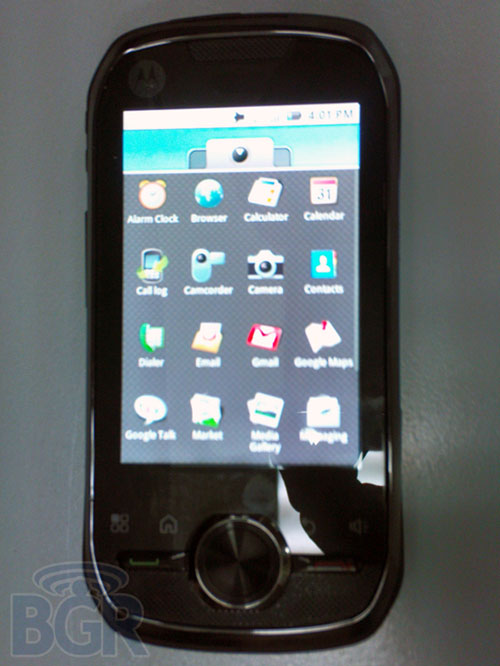
As smartphones further cemented their place in the enterprise, Apple, Motorola, Google Android, and RIM Blackberry vied for the spotlight.

The last 12 months have been an exciting time for smartphone fans, as major players have seemingly come back from the dead, applications played a bigger role than ever, and mobile computing continued to change. This list includes 10 of the biggest stories in the smartphone space, in no particular order.
1. Motorola Mounts A Comeback Motorola's cell phone division has been doing so poorly over the last few years that the company planned to spin off the division into an independent company. While those plans were put on hold because of the global economic recession, Motorola still needed to find a solid direction for its handset division, as well as achieve a few hit devices.
Co-CEO Sanjay Jha appears to have found that direction, and the company is focusing on smartphones powered by the Google-backed Android operating system. Motorola introduced two Android-powered devices in 2009, and it plans to release multiple smartphones in 2010 with the Linux-based OS.
Christy Wyatt, Motorola's VP of software platforms, said the decision to hone in on Android will enable it to deliver handsets that offer great end-user experiences. Calling Android a "vehicle for innovation," Wyatt said Motorola wants to deeply customize its handsets in order to stand out from the crowd.
The Motorola Cliq showed off this customization with the MotoBlur service, which is an embedded service that aggregates a user's photos, contacts, and other information from places like Facebook, corporate e-mail accounts, Twitter, and other online sources.
But Motorola's biggest moment of 2009 came with the introduction of the Droid for Verizon Wireless. The handset is probably Motorola's most visually appealing device since the popular Razr, and it is the first smartphone to feature Android 2.0. The Droid has been a hit with consumers and, thanks to a strong multimedia campaign by Verizon Wireless, it is expected to sell more than a million units by the end of the year. While the Droid and the Cliq aren't enough to completely turn around the struggling handset division, these devices lay a solid foundation for the company that essentially invented the cell phone.
2. BlackBerry Hits The Mainstream
A typical BlackBerry user five years ago was a busy mobile professional who always needed access to corporate e-mail. While Research In Motion still has a dominant share with this type of user, BlackBerry smartphones have definitely gone mainstream. During its second quarter of 2009, the company said more than 80% of its new subscribers were non-enterprise users.
RIM has noticed this shift as well, and it is rolling out consumer-friendly devices like the BlackBerry Storm 2 and the low-cost BlackBerry Curve 8520 to capitalize on this market. It has also launched an application store and a social network to appeal to mainstream users, and RIM's growth potential in the casual market helped it top Fortune's list of the world's fastest-growing companies.
Competing in the casual space does represent multiple challenges though, as even the most die-hard BlackBerry fans have to admit RIM's user interface and multimedia capabilities lag behind companies like Apple. But RIM is confident that it can continue to deliver enterprise-grade services while still catering to the mainstream.
"It's much easier to go from enterprise to consumer because once you get the foundation correct, it's easy to turn off features if you want," said Mike Kirkup, RIM's director of developer relations. "Things like security and the basic building blocks that are required for businesses are difficult to add in after the fact."
3. Apple Revamps The iPhone 
When Apple introduced the iPhone 3GS in June, most analysts saw it as an evolutionary upgrade, rather than a revolutionary improvement to the hardware. With a boosted processor, better camera, more storage space, and a digital compass, the iPhone 3GS was arguably a larger improvement from the previous version than the iPhone 3G was. Many IT departments also appreciated the hardware encryption and true support for ActiveSync policies because it made it easier for the iPhone 3GS to become a good corporate citizen.
But Apple's smartphones have never really been technologically above their competitors, as the first iPhone didn't have 3G access or a GPS chip. Apple has been wildly popular in the smartphone space because it continues to add new capabilities with new versions of the software. The iPhone OS 3.0 fixed multiple nagging holes in the platform like copy and paste, and it added features like universal search, voice memos, and remote wiping in conjunction with the MobileMe service. The latest OS also added more than 1,000 application programming interfaces for developers, and this opens the door for more innovative programs.
Apple has sold more than 21 million iPhone units, and has inked deals in new markets like China and South Korea. Thanks to 3.0 OS improvements, the device is also finding its way into corporate environments.
There are still a few questions about the iPhone's exclusivity in the United States though, as the deal with AT&T is reportedly set to end in 2010. Additionally, the competition has gotten a lot better since the debut of the original iPhone, and there are credible competitors on every major U.S. carrier.
Even with its potential hurdles, the iPhone appears to have strong momentum that shows little signs of slowing down.
4. Android Army Gathers Soldiers 
For most of 2009, the idea of Android was more appealing than the devices. The T-Mobile G1 was a geek's dream but it lacked enterprise support and the form factor was hit or miss. In the second half of the year however, there has been a flood of attractive Android smartphones from the likes of HTC, Samsung, LG Electronics, Motorola, and smaller manufacturers. An Android phone can now be purchased on Sprint Nextel, T-Mobile, and Verizon. So far, AT&T has not committed to Android, but rumors suggest it will land a device sometime next year.
Google said it expected up to 20 Android-powered devices to be released by the end of 2009, and companies including Sony Ericsson and Asus-Garmin are expected to release Android smartphones in 2010. Developers also are taking Android seriously, as there are now more than 13,000 programs in the Android Market.
But some studies suggest content creators aren't very happy with Android because of low download volumes and trends that indicate Android users aren't likely to pay for apps.
The wide range of Android devices also potentially presents fragmentation problems, as some developers are already grumbling about having to optimize apps for a variety of screen sizes and form factors. Additionally, companies like HTC and Samsung are layering their own user interfaces of top of Android, and this could eventually lead to some compatibility issues.
For Google, the growing success of Android exposes more users to its ecosystem and potentially to its online advertising juggernaut. Enterprise mobility specialists like Good Technology and Zenprise also said there is growing interest from corporations wanting to use Android-powered smartphones.
While the 2.0 version boosted enterprise features, Android still lacks crucial enterprise necessities like hardware encryption and full ActiveSync policy support. Google said it plans to bake in more enterprise-friendly features in future versions of the mobile OS.
5. Mobile App Market Explodes
Mobile apps have been around nearly as long as smartphones, but the space has really heated up over the last year thanks to the success of Apple's App Store. Apple iPhone and iPod Touch owners have downloaded over 2 billion programs, and developers are flocking to the platform. It's particularly impressive considering Apple CEO Steve Jobs originally wanted all iPhone apps to be Web-based only.
While Apple is leading the space, the competition is not as far behind as it may seem. The Android Market now has more than 13,000 programs, and there are more than 20,000 Windows Mobile apps, although most of these aren't in the official store. RIM hasn't given any download details about its BlackBerry World, but it said it is pleased with the number of users and paid downloads. Nokia, Samsung, and Palm have also rolled out their own app stores, and many are trying to capitalize on the growing discomfort with Apple's role as gatekeeper for the App Store.
The surge in apps is creating multiple opportunities for developers, but these content creators are facing an increasingly fragmented world. With the iPhone, BlackBerry, Android, Windows Mobile, Symbian, and Palm, it is becoming increasingly difficult for developers to support all these platforms. Tools like Qt may help alleviate these problems, and Google is predicting that the Web may eventually be the ultimate mobile platform.
6. Microsoft Tries To Keep Pace 
The consensus in many analyst circles is that Microsoft is a step behind its competitors in the smartphone space, but the company made multiple moves in 2009 to stay in the race. While it has lost overall market share, the growth of the smartphone market means more Windows Mobile smartphones were shipped in 2009 than in 2008.
The company released Windows Mobile 6.5 in October, and the software update added increased support for touchscreen interfaces, a refined user interface, and multiple features. The OS was widely panned in the tech press, but industry experts said the software was well-received in the enterprise market.
"People were looking forward to 6.5 because it allowed a lot more administrative capabilities," said Ahmed Datoo, VP of marketing for Zenprise. "While I can't really comment on the end-user side, I know it made Windows Mobile devices a lot easier to manage and IT folks greatly appreciated that."
The updated OS has also been well-received by some handset makers, as Microsoft expects more than 30 devices to have shipped by the end of the year from manufacturers like HTC, Samsung, LG Electronics, Toshiba, and others. Windows Mobile 6.5 also puts the platform on par with its competitors by adding Windows Marketplace for Mobile, which provides end users with an over-the-air way to buy, download, and install apps.
Microsoft's mobile OS is facing some stiff challenges though, as the enterprise space is clearly dominated by RIM, and Windows Mobile has not caught on with the mainstream users like the iPhone has. Motorola has also shunned the current version of Windows Mobile in favor of Android, and there's concern that other handset makers may follow suit.
Microsoft does have a strong community of developers in its favor, and the company is committed to developing and improving its mobile platform. However, some analysts believe it will not be able to make a significant turnaround until Windows Mobile 7, which is expected to be released in the second half of 2010.
7. Palm Becomes Relevant Again, Kind Of 
Not too long ago, Palm owned the U.S. smartphone space, but as 2009 started the company was struggling mightily. While it still sold millions of Palm Centro handsets, RIM and Apple were handily outselling it in the high-end smartphone space. Expectations weren't very high when Palm said it would announce a new OS and smartphone during January's Consumer Electronics Show, but the company wowed the press with the introduction of webOS and the Palm Pre.
"Wow," said Ryan Block of gdgt.com after CES. "Well, that was kind of amazing, and I don't say that very often. Yes, we are lacking a LOT of really important details, but there's little doubt that Palm is back in a big way, and that this OS and device has the potential to make up for many of their missteps over the last five years."
The Pre, released about six months later, was met with solid reviews, but failed to produce blockbuster sales numbers. The rival iPhone 3G and iPhone 3GS each sold over one million units in their opening weekends, and most analysts predict the Pre won't hit those numbers by the end of the year. Palm recently released a GSM version of the Pre for the European markets, and this should help goose sales.
The second webOS smartphone, the Pixi, was also released exclusively on Sprint in November, and the $100 device should be appealing to teenagers and first-time smartphone buyers.
But the smartphone space is increasingly being dominated by deep-pocketed rivals, and some analysts worry if Palm will have the resources to compete. For example, rival RIM also primarily makes smartphones, but it has nearly eight times the number of employees and significantly more revenue.
Palm has laid its bets on webOS, and CEO Jon Rubinstein has said the company is preparing multiple devices that should eventually get on more U.S. carriers. Palm's size also means it can be profitable even if it only manages to carve out a relatively small piece of the growing smartphone market.
8. Google Voice Can't Get On The iPhone 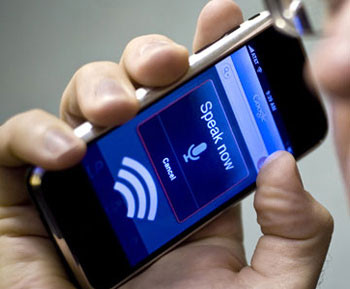
At first glance, Google Voice not being able to get into Apple's App Store may not seem like a big deal because the invite-only call forwarding service only has a few thousand users. But the process could be an indicator of what types of services and apps are allowed on users' smartphones in the future.
Google submitted its app to the App Store in June, but the program was never approved and Apple pulled a third-party Google Voice app because it duplicated existing functionality. The move drew criticism from multiple news publications, and it even drew the attention of the Federal Communications Commission.
Many suspected AT&T had a hand in the rejection because the app could potentially cause it to lose revenue with its ability to make cheap long-distance calls and send free text messages. AT&T denied any involvement in the App Store approval process, and Google pointed the finger at Apple.
"Apple's representatives informed Google that the Google Voice application was rejected because Apple believed the application duplicated the core dialer functionality of the iPhone," Google said in a letter to the FCC. "The Apple representatives indicated that the company did not want applications that could potentially replace such functionality."
While Apple has faced some flack for its approval process before, the Google Voice app was the most high-profile case it has seen. Apple has said it needs to have this vetting process in place to ensure the apps are secure, and to deliver a good experience for the end user. Competitors like the Android Market and Microsoft's app store routinely tout their more open standards for apps, although most major app stores have some form of security or content vetting.
For most mainstream users, the Google Voice blockage is merely inside baseball, and the App Store will continue to draw millions of downloads a year. But the FCC's public prodding shows smartphones are increasingly being seen as mobile computers, and questions remain about what rights end users have over what types of software they can use on these devices.
9. Symbian Marches Toward Open Source 
Often forgotten in the U.S. markets, Symbian is still the most widely used smartphone OS in the world. About 18 months ago, Nokia purchased Symbian with the goal of spinning it into an open source OS.
Symbian is widely seen as a highly capable platform that has an aging user interface that lacks the visual panache of some of its competitors. The Symbian Foundation was created as an independent entity to turn the OS open source, and it has spent the last year looking to address some of the platform's perceived weaknesses.
The foundation is reworking the OS, and it is expected to have a refined user interface, as well as contributions from various foundation members including Qualcomm, AT&T, Nokia, MySpace, and others. It also has an aggressive plan to continually update the OS with new versions expected nearly every six months. As an open source OS, Symbian will be directly competing with Android. The foundation said Symbian won't be as tied to a single contributor's interests as much as Android could be aligned with Google's bottom line.
Some developers have also complained that it's too difficult to create apps for Symbian, particularly compared to Android or the iPhone. The foundation has launched a developer program called Symbian Horizon that aims to lower the barrier of entry and help content creators get their apps in as many virtual stores as possible.
Developers and handset makers can get a taste of what Symbian will look like from the foundation's beta site, and Sony Ericsson is expected to have the first handset with the open source Symbian. The foundation expects a plethora of Symbian devices to be released in 2010.
10. Computer Makers Jump Into The Smartphone Space The mobile computing space is converging, and some of today's smartphones are as powerful as laptops were only a few years ago. This is causing various manufacturers to jump into new product categories in order to capitalize on this shift in computing. Apple has been the most successful so far, as its iPhone is continually among the best-selling smartphones, and it is widely seen as an innovator in the space.
Acer took the smartphone plunge in 2009, and it plans to release multiple devices in mature and emerging markets. After years of speculation and rumors, Dell also introduced a smartphone this year that is powered by Android. Dell is starting off in Brazil and China, but analysts expect it to enter the North American and European markets after it has refined its mobile division.
Some analysts warn that the smartphone space can be challenging because software development is crucial, and some computer makers are not adept at this.
"Many of these new entrants look at Apple's success and think they can get a piece of the pie," said Charles Golvin, analyst for Forrester Research. "But they're not Apple."
These companies face many challenges, but the potential audience is too much to ignore. For example, China Mobile alone has more than 500 million wireless subscribers, and many of these are expected to transition to smartphones over the next five years.
The shift in mobile computing is also impacting handset makers, as Nokia recently introduced a netbook powered by Windows 7. HTC is also reportedly mulling creating a laptop.


 Motorola's official spec sheet for the Devour reveals that there'll be a Flash Lite runtime on board -- presumably version 3.1, which offers support for a variety of video codecs and Flash 9 content -- and more importantly, it'll work in the browser. That's pretty cool -- it gives the Devour one small leg up on its Droid big brother and matches capabilities that HTC has rolled out in the past on the Hero, but what's more interesting is that the Devour allegedly uses the same next-gen low-cost smartphone processor from Qualcomm, the MSM7627, as the Pixi. Palm has elected not to roll out the Pre's upcoming Flash support to the Pixi on account of its lower-end specs, which begs the question: is Android's Flash Lite 3.1 player significantly more efficient than webOS' Flash 10.1 player, does the Devour have more horsepower packed in there than it's letting on, or does Palm just have higher performance standards for annoying ads than Moto does?
 The Motorola Milestone has been on course to launch on TELUS in Canada in early 2010, so this isn’t necessarily breaking news in that sense, but IntoMobile has a couple of additional nuggets of information to throw in the mix.


 Not long after we’ve heard that the Motorola Shadow might become the Google Nexus Two, Motorola’s CEO Sanjay Jha has now confirmed they’re working on a Google phone – which should be part of those 20 to 30 Android handsets that the company will reportedly launch this year.

 Patent litigation between Motorola and Research In Motion is heating up, with Motorola filing a complaint with the U.S. International Trade Commission.