Sunday, February 14, 2010

Is this the face of the iPhone 4G?


There's very little to go on at this point, just a series of photos posted to a forum by a device repair company, but if their suspicions are correct, this could be the front panel of the presumably upcoming "iPhone 4G." iResQ claims to have obtained the sample part from a "reputable source" that has provided genuine parts to it in the past, parts which iResQ uses for repairing products -- even if those products don't exist yet. Interestingly, the LCD is factory glued to the digitizer on this 4G wannabe (like on the original iPhone), as opposed to them being separate elements on the 3G and 3GS, meaning higher replacement costs. But most notable about this face part is the fact that it's roughly 1/4-inch taller than previous generations. Your guess is as good as ours as to why it's taller, since the screens themselves seems very similarly sized. We're also incredibly curious as to whether this here face would line up with that supposed 4G midboard we saw a little while ago. So, elaborate scam by iResQ to get its name up in lights? Prank played by a fun-loving parts supplier? Earth shattering iPhone form factor change unearthed? And just what is that "reflective surface" supposed to be for? Beats us. The flip side of the screen can be seen after the break.

Read More

Microsoft's PB10ZU (turtle) and PB20ZU Project Pink phones outed by FCC?


Oops. Those two pics looks similar, eh? And if we're not mistaken, Microsoft's Pink phone is rumored to be made by Sharp. This wirerame for model PB10ZU just hit the FCC looking every bit the "Turtle" device that was leaked last year. Of course, seeing Sharp behind Pink is only natural since it was one of Danger's manufacturers of choice for the Sidekick -- a team wholly ingested by Microsoft a few years ago. Looking through the FCC docs we see that it's a slider with dual-band CDMA, EVDO Rev. A, Bluetooth, and 802.11b/g WiFi. We also see reference to a second model, the PB20ZU (aka, "pure"?), although that model is lacking any detail whatsoever. The tastiest of FCC docs are being withheld by request until March 29th -- right in line with a rumored spring launch. Hopefully Microsoft will have more to say about Project Pink and Windows 7 devices here in Barcelona so stay tuned.
Read More

Google Buzz Privacy Update Has Users Seeing Stars (Instead Of Your Friend’s Private Email Address)

Google Buzz launched with more than its fair share of privacy issues, leading to a significant backlash from some users. Fortunately the Buzz team is fixing these issues at a brisk pace. Today, they’ve rolled out a fix to a bug that would let users inadvertently expose their friends’ private email addresses using Buzz’s @reply system. Now, instead of sharing these private email addresses with the public, Buzz will simply show everyone a series of asterisks.

The bug stemmed from the way Buzz handles @replies. To send a message to someone you do it using their Email address, and Buzz makes this easy by showing an autocomplete box as you start typing their name. Unfortunately if you happened to pick an Email address that wasn’t associated with a Google Profile (which is quite easy to do given how many people use multiple accounts), Buzz would expose that Email address to the world.

Earlier this week Google helped allay privacy concerns with some other changes to Buzz, including a more prominent option to hide your follower lists (which could be used to figure out who you frequently exchange emails with).

Google Buzz Abandons Auto-Following Amid Privacy Concerns

As we noted this morning, Google isn’t wasting any time in responding to user criticism about Buzz. Now they’ve rolled out another set of changes to further address Buzz’s privacy issues. The biggest change involves the automatic follow system: it’s now being switched to a suggestion model, where Google will present you with a list of friends it thinks you’d like to follow, but gives you a chance to deselect them before you start using the service.

That’s a pretty big change — when Buzz launched four days ago, one of its selling points was that it took no work on the user’s part to get started, because Buzz would automatically follow the people you interact with most on Gmail. Of course, that isn’t always a good thing — there are plenty of cases when you wouldn’t want people to know who you’d been communicating with. After an initial backlash Google made it easier to hide which users you were following, but now they’re ditching the auto-follow model entirely. Fortunately it only takes a minute to go through the suggestions, so it’s not much of a hurdle.


New users will see a screen like the one above, and Google’s post says that existing Buzz users will be shown a version of this friend selection screen in the next few weeks to confirm that they’re comfortable with everyone they’re following. The service is also going to stop automatically connecting Google Reader and Picasa albums to Buzz accounts, though those options will still be available.

Finally, Google is adding a Buzz section to Gmail’s Settings. Why this wasn’t there from the start is beyond me — before now, if you wanted to adjust your Buzz settings you had to go to your Google account page, which made very little sense because most people use Buzz from Gmail.


Earlier today, Google made yet another change to Buzz’s privacy settings by fixing a bug that could cause users to inadvertently expose their friends’ private settings.

All of these are good changes for Buzz, and I’m optimistic about its future, but I can’t help but wonder how they all made it through months of internal testing.
Read More

Samsung Wave S8500 specs and photos show up

Samsung Wave S8500, the South Korean company’s first Bada OS smartphone, has just appeared in lots of live photos – ahead of its official announcement at MWC 2010.


As it turns out, the Samsung Wave S8500 is only 10.9mm thick and features about everything you’d want from a modern smartphone.

The Wave S8500 looks really nice, too, and its body is made out of aluminum, while its display is covered with tempered glass (anti-scratching).


And here are the known specs of Samsung Wave S8500:

* 3.3 inch AMOLED touchscreen display
* Bada OS with TouchWiz 3.0
* HSDPA
* Wi-Fi b/g/n
* 3.5mm headset jack
* DivX player
* 5MP autofocus camera with flash and 720p video recording
* 1GHz CPU (probably Snapdragon)
* 2GB of internal memory
* MicroSD card slot
* 1500 mAh battery

GPS is probably somewhere in there, too.

Details about the price and release date of Samsung S8500 Wave are not known at the moment, but we’ll probably know them tomorrow or on Monday.

Via DailyMobile
Read More

Is Google moving too far (from search) too fast?

Google should diversify, analysts say, but risks losing focus

Google Inc. is stuck between something of a rock and a hard place.

The company, which rose to prominence and fortune on the basis of its highly popular search service, has been expanding out from its core business at an increasingly swift rate -- and in a growing number of directions.

That expansion has some analysts wondering whether Google is in danger of losing focus on what made it such a profitable company, even as those same analysts say it can't rely on search as its only avenue for making money. Right now, Google relies on search for 95% of its revenue, according to Karsten Weide, an analyst at IDC.

"Google has the problem of too much money and not enough control over what to do with it," said Rob Enderle, principal analyst at Enderle Group. "As a result, they are building complexity at an alarming rate, and that complexity should eventually choke them, much as it did Microsoft.... It isn't that each project isn't important. It's that they often don't dovetail well and should eventually result in a company that is unmanageable."

"I think they are a little scattered," said Weide. "They are doing a whole lot of things, and I think a little more focus could not hurt.... But this is a market where you can't afford to sit on your hands. You have to look at what's going on and what is new and what is coming up. Basically, you're betting money."

Last summer, Google announced that it was developing an operating system called Chrome OS. Then in September, it released its Google Wave collaboration tool, taking another step away from its search roots.

And then earlier this year, it unveiled the Google-branded and -designed Nexus One mobile phone.

And this week, Google picked up the expansion pace quite a bit. On Tuesday, it took a major swing at social networking sites like Twitter and Facebook when it unveiled its Google Buzz upgrades to Gmail that make it more of a social networking hub than just an e-mail service. Google Buzz is aimed at helping users better find the most important information contained in their flood of social posts, pictures and video.

The company followed that with an announcement that it plans to build what it calls ultra-high-speed broadband networks in some parts of the U.S. Finally, yesterday, Google announced that it's buying Aardvark, a social search company.

Weide agreed with Enderle that Google has so much money in its coffers that it can try new projects and venture into new areas.

The problem, though, is that undertaking so many new projects can, over time, strain a company's finances and cause executives to lose focus.

"I think they're so rich it doesn't really matter at this point," said Weide. "IBM has been there and Microsoft has been there -- even AOL and Yahoo were there. They were so big, they just didn't care. And everybody has their comeuppance. It will happen to Google eventually. Everyone has their time. You want to be wise in what you do, and prudent. And you don't want to be all over the place."

Stuart Williams, an analyst at Technology Business Research, said Google is on a positive track, trying to pull in revenue from new sources. And that, he added, is a good idea.

"These [moves] all surround Google's efforts to expand its total available market and to seed new markets for growth," said Williams. "Google's strategy is to expand outward from search to include more of the software, hardware and devices that either drive or enable search and information.... Increasingly, Google will need to focus on operations and the execution of its initiatives."
Read More

It's Microsoft's Game to Lose with Windows Mobile 7

Speculation is mounting that Microsoft will show off the Windows Mobile 7 operating system at a wireless industry conference in Barcelona next week. Customers have waited through a series of delays and setbacks, but if those predictions turn out to be true, it could help to generate some renewed excitement over the waning mobile platform.


The Windows Mobile 7 platform is rumored to have an interface based in large part on the Zune HD which has received a fair amount of praise. There are also rumors that Microsoft is forking its business mobile platform and its consumer offering with the addition of a platform based more on social networking and aimed at a teen audience.

Microsoft did develop an interim mobile platform--Windows Mobile 6.5-- to add some incremental improvements over Windows Mobile 6, but compared with platforms like Android and iPhone, Windows Mobile is lacking and Microsoft has seen its lack of progress reflected in declining market share.

On the other hand, Microsoft is still in third place for smartphone platforms in the United States. It is behind RIM and Apple, but at 18 percent of the market it is solidly ahead of Palm and Google. It has dropped out of second place, and lost a percent of market share over the last quarter, but if any of the other platforms (with the possible exception of the iPhone) were to experience the delays and setbacks that Microsoft has encountered, the market share drop would be much more dramatic.

The relatively small decline in market share for Windows Mobile can be attributed in large part to attrition and impatience. As business professionals lose or break older Windows Mobile devices, or contracts expire and they switch wireless providers, they are forced to choose a new smartphone and the current Windows Mobile does not offer a very compelling platform compared with iPhone and Android.

I personally represent that group. I held out as long as I could--even falling back on an older feature phone for months--waiting patiently for a new Windows Mobile. I didn't find Windows Mobile 6.5 to be enough of an incentive, but I needed a smartphone and couldn't continue holding out for Windows Mobile 7. So, now I have an iPhone...for now.

The fact is, barring an announcement that it is simply throwing in the towel and giving up on the mobile operating system altogether, Microsoft still has an audience anxiously waiting to see what it will deliver. Even in third place, Microsoft is easily within striking distance to reclaim second place from Apple, and it could pose a challenge even to RIM's BlackBerry dominance if Windows Mobile 7 can live up to expectations.

While Microsoft has struggled with its mobile operating system, it still occupies a dominant stake of the server operating system, desktop operating system, business productivity software, messaging, and Web browser markets. Bells and whistles aside, it's hard to argue with the potential of a smartphone platform that can seamlessly tie in with the platforms and tools that businesses rely on.

RIM, Apple, Palm, and now Google, all recognize and respect Microsoft's presence in the enterprise. These other mobile platforms realize that integration with Microsoft backend tools--particularly Exchange Server--is imperative to success in the enterprise. No matter how hard they try, though, the solutions are often clumsy or cumbersome, and have a sort of "square peg in the round hole" feel to them.

The core appeal of a Microsoft mobile operating system is the inclusion of native tools that naturally integrate with the existing server, desktop, and office productivity environment. Windows Mobile is uniquely suited to deliver a seamless and familiar experience for business professionals.

Expecting Microsoft to introduce unique innovations or raise the bar in any way for mobile operating systems is probably a recipe for disappointment. Assuming that Microsoft can at least improve Windows Mobile to the point that Windows Phones are more or less on par with next-generation smartphones like the iPhone or Droid will be enough, though, for Microsoft to get the ship pointed in the right direction and begin to reclaim some of its lost mobile platform market share.

Microsoft has a built-in audience and the game is Microsoft's to lose.
Read More

Windows Phone 7 Series: that's the name


So we were just casually strolling through Plaça d'Espanya today in front of Fira de Barcelona -- better known as the site of MWC 2010 this coming week -- and we couldn't help but notice that Microsoft's digs at the Hotel Catalonia across the street had white stickers obviously covering something important underneath the Windows Phone logo that we'd seen a few days ago. The ensuing conversation went something like this:

Chris: Dude, I think I see something there underneath the sticker. I think it says "SEVEN" in all caps.
Thomas (staring intently): No way.
Chris: Yes, I'm telling you, "SEVEN." It's there!
Thomas: Fanboy. It's official, I'm covering MWC with an insane person... looks like I'm bouncing back to Amsterdam. Peace.

Well, turns out we were both wrong -- a little Photoshop magic (okay, a lot of Photoshop magic) reveals "7 Series" underneath the decal, just waiting to be torn off after Monday's big press event. The "7" is certainly no surprise, but the "Series" part of this is cause for some last-minute speculation -- are we actually going to see consumer and professional breakouts of the platform as we'd heard rumored a few times in the past? We'll know in less than two days. Follow the break for the full retouched image.

Read More

HTC Photon to be announced as HTC HD Mini at MWC?

Remember the HTC Photon, appeared in that leaked HTC roadmap alongside HTC Bravo, HTC Legend and others?


Well, HTC might announce the Photon at MWC, under a different name: HTC HD Mini.

It looks like the HTC HD Mini will come with Windows Mobile 6.5 (although I assume it’s actually WM 6.5.3), and not with Windows Mobile 7 – which should be announced at MWC as well.

The features of HTC HD Mini include: 3.2 inch HVGA capacitive touchscreen display, HSPA, Wi-Fi, A-GPS, 3.5mm headset jack, 5MP camera and a 600MHz Qualcomm MSM7227 CPU.

As previously reported, the HTC Photon / HD Mini should be available starting April. Until then, let’s hope HTC will unveil the Legend and the Bravo at MWC, too
Read More

Saturday, February 13, 2010

Wall Street Journal: Windows Mobile 7 coming next week


We pretty much knew that Windows Mobile 7 is coming next week at MWC, but the Wall Street Journal has a piece up confirming the announcement, along with a few other interesting details. As we'd heard, the new UI is a riff on the Zune HD interface, and the OS "reflects a much tighter focus" on hardware / software integration, all based around a "small number" of hardware chassis specs -- pretty much what we've known, but it's interesting that the Journal's source says the plan is to "limit the wild variation" that's typically been the hallmark of Windows Mobile. The WSJ also says that the long-rumored Pink project is a separate phone designed to replace the Sidekick -- which we also basically knew -- but that it won't make an appearance at MWC at all. Hmm, sounds like someone ought tell all those Twittering Danger employees. We'll see what happens -- it all goes down early on Monday.
Read More

Google Buzz Privacy Issues Have Real Life Implications

Merging something designed for public broadcasting (Buzz) with something inherently private (Gmail) was just looking for trouble.

Google is -deservedly – getting a lot of heat for the fact that its latest social product has a number of privacy flaws baked into it by design.

They’ve since made some improvements to the product, but that’s not where the story ends.

Some people think the complaints are unwarranted and the issues not all that bad, while some think it’s mostly annoying and others don’t even know there are issues yet (or that Google launched something new at all). And then there those whose lives are already being impacted by the privacy loopholes in Google Buzz – and not all in a good way.

See for example this story of an anonymous woman who writes a (self-proclaimed) feminist blog, which she started after leaving an abusive marriage. (found on Hacker News)

Hint: the title is ‘Fuck you, Google’.

An excerpt:

I use my private Gmail account to email my boyfriend and my mother.

There’s a BIG drop-off between them and my other “most frequent” contacts.

You know who my third most frequent contact is?

My abusive ex-husband.

Which is why it’s SO EXCITING, Google, that you AUTOMATICALLY allowed all my most frequent contacts access to my Reader, including all the comments I’ve made on Reader items, usually shared with my boyfriend, who I had NO REASON to hide my current location or workplace from, and never did.

You can read the rest of the story in the blog post, but needless to say this woman is justifiably very angry with the Mountain View company.

Now, I’m sure some of our readers will have an answer ready. That she should have changed this setting or not have touched that one, but that would be beside the point. Which is that even with the improvements that were made to the Buzz product, Google is confusing the hell out of people here – and make some lives hell for them to boot.

Expect more stories like this.
Read More

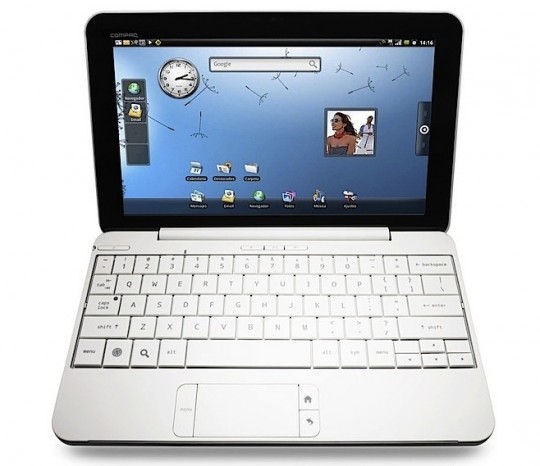
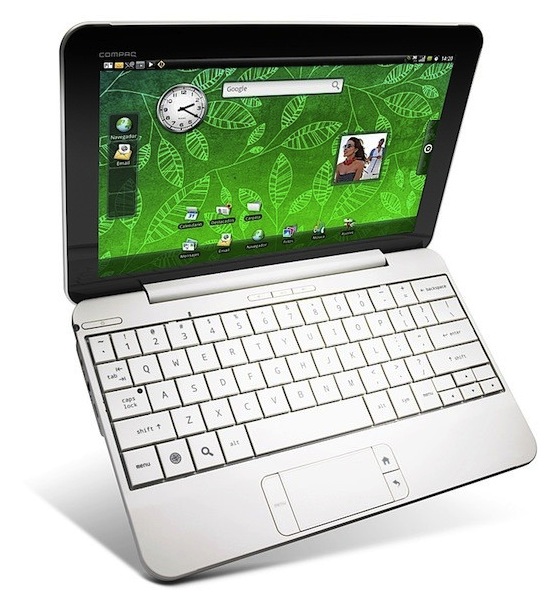
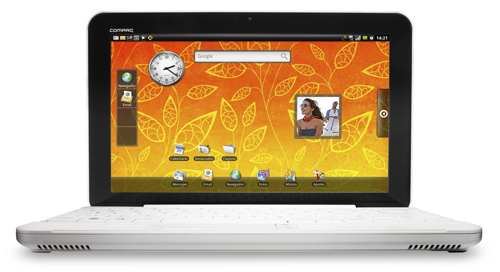
HP Compaq Airlife 100 3G smartbook announced

HP Spain have announced a new smartbook, the Compaq Airlife 100, with a netbook-style form factor, 10.1-inch touchscreen and integrated 3G. While HP aren’t spilling the beans on the Airlife 100’s chipset, last we heard they were playing with Qualcomm’s 1GHz Snapdragon, so it seems a reasonable assumption.


Elsewhere there’s a 16GB SSD and WiFi along with the 3G connection, while HP also reckon the frugal smartbook will be leggy enough to last for 12 hours on a single charge. Alternatively standby is tipped at 10 days.

From the photos it’s obvious that there’s a webcam and an SD card slot, together with some useful shortcut keys around the trackpad; HP have also loaded up their own touchscreen UI. According to the company, the Compaq Airlife 100 will arrive in Europe this spring, as a subsidized deal with carrier Telefonica. No word of a US launch or any pricing details.


Read More

7 reasons to move on from ageing, tired Windows XP

There is no doubt that Adrian Kingsley-Hughes has passion for what he does, and his latest post in regards to sticking with Windows XP certainly made me chuckle. But we have to face facts that Windows XP is now in excess of nine years old, and should have ran past its self-by-date


Stick with what you know It’s old and tired

That dazzling blue interface was revolutionary for Microsoft and incredibly bold of the company to go so bright and cheerful, almost. But with the temptation of “floating” glass windows, transparency and clarity in the newer versions of Windows, you barely need to learn anything new.

You should just be able to start Vista or 7 for the first time and be guided through everything, and comfortable enough using your prior knowledge to get everything out of it that you had with XP.


Certainty New and improved certainty

Windows 7 packs more drivers in and even Ubuntu has started supporting incredibly powerful hardware, should drivers be written by a community member or the manufacturer.

Newer graphics cards especially, along with sound cards and other multimedia devices will work with Windows XP still, but they also support Windows Vista/7; with DirectX being far more powerful than ever before, surely you’d want to take advantage of that?

Cost Go open source instead?

They said Windows XP was expensive at the time, but for what it was giving you in line with the global economy, it wasn’t bad at all. Vista of course looked bad in terms of cost and Windows 7 is cheaper than ever. But as I’ve said, Ubuntu 9.10 is incredibly fast, reliable and works in line with how you’ve learned to use computers. So why not go whole hog and go open-source to a newer, better operating system instead?

It’s still supported by Microsoft …but not for long

Yes, XP is still supported until 2014 but only because it has been, granted, rather popular. But if you are ready to get a new computer, whether it be a laptop or a fully-fledged desktop computer with all singing and dancing bells on, don’t stick with XP.

Plus, you can’t even buy Windows XP anymore off the shelf, and if you’re unlucky enough to have it bundled with your new computer, then surely something doesn’t strike right with the OEM. You and the manufacturers should be aiming for future-proofing, not sticking with relics from the old decade.

Developers still support XP Developers are going next-gen

Developers have been aiming forwards for a while now, by taking advantage of new technologies in-built into the latest operating systems. You wouldn’t have TPM management on a Windows XP machine, so why not upgrade and get the best security features available (or rather was, had it not been recently hacked)?


So developers, and therefore you who use the software that they build, should be using these new features, whether it’s the latest .NET Framework or the Compiz/DWM software that makes Windows and Ubuntu look glossy and lovely. Plus, x64 Windows XP isn’t too easy to get hold of nowadays without an MSDN or TechNet subscription, whereas Windows Vista/7 and x64 editions of Linux are relatively easy.

Upgrade components to stay secure Or more overall security

I’m not here to debate whether Vista/7 is more secure than any other operating system in the world, because let’s be honest now, if you’re behind a server than your client is only as secure as your infrastructure. Even with all the patches, the hotfixes and the service packs, future operating systems will have better suited under-the-cover technologies which can prevent malware.

UAC - love it or hate it - there’s no doubt it must have helped someone out there. And failing that argument, Linux users are a far lesser risk of attack so upgrade to something open-source and shiny.

Do you really need to upgrade? No, but you should!

Let’s face it. Would you rather be living in the past or gazing ahead at the future? I’ve always been one to play with the pre-release stuff and look ahead at what’s next. Those with student email accounts may as well jump on board and take solace in knowing you’ll get a far cheaper deal if you upgrade to Windows 7, and as I’ve said before, Ubuntu is a worthy adversary if you choose the non-Windows route.

Windows XP was good for its time, but I like to think, at least hope, that we’ve moved on since 2001.
Read More