Showing posts with label Tablets. Show all posts

Monday, January 11, 2010

Are slates going hurt Microsoft's bottom line any more than netbooks?

Are all slates tablets? Are all tablets netbooks? Does the distinction between slates, tablets, netbooks, smartbooks and e-readers matter to anyone — or do anything beyond confuse customers more than they are already)?

The real question in all this, for Microsoft watcher, customers and partners, is whether slates will ding the profits of the Windows client business any more or less than netbooks have.

As Microsoft officials make sure to point out, netbooks can run any version of Windows 7. So can the soon-to-be-released slates from HP, Pegatron, Archos and other Microsoft partners, I’d assume. (Microsoft officials said last week the HP slate that Ballmer showed, but which seemed to be non-existent at the show, was running Windows 7, and will include a customized interface created by HP.)

It’s up to PC makers which version of Windows 7 they preload on new machines and devices. Many netbooks are preloading the cheapest, lowest end version of Windows 7, Starter Edition. Microsoft gets less per copy for Starter from its OEMs than it does for Premium or Ultimate or any of the other SKUs. (It’s unclear exactly how much less.)

Netbooks have been a double-edged sword for Microsoft. The robust sales of netbooks helped keep the bottom from completely falling out of the Windows business in 2009. But the growth of netbooks also cut into Windows’ profits. Microsoft ended up offering Windows XP to netbook makers at the firesale price of about $15 per copy, according to many estimates, in part to convince PC makers not to preload Linux on those machines. Microsoft’s argument: Even though Linux, at $0 per copy, is cheaper than Windows at $15 per copy, there will be far fewer support calls from customers accustomed to Windows than those unfamiliar with Linux. And there are a lot more Windows apps than netbook apps. So why not just go with Windows?

What’s going to happen with slates, the multi-touch-optimized successors to the stylus/digital-ink-dependent tablet PCs? Will Microsoft have to cut the price of Windows 7 that it offers PC makers so as to keep them from doing a Dell, which provided a quick glimpse of an Android-based, 5-inch handheld at CES? Or from coming out with a Chrome OS/ARM-based slate later in 2010? Competition is good for Microsoft’s partners: It provides them with a new bargaining chip to be used when negotiating the price per copy of Windows with Microsoft.

On the TechFlash blog last week, Todd Bishop quizzed Tammi Reller, the Chief Financial Officer of Microsoft’s Windows and Windows Live business unit, about the potential impact of slates. Not surprisingly, Reller said Microsoft is envisioning slates the same way it does netbooks: As a PC companion, not a replacement.

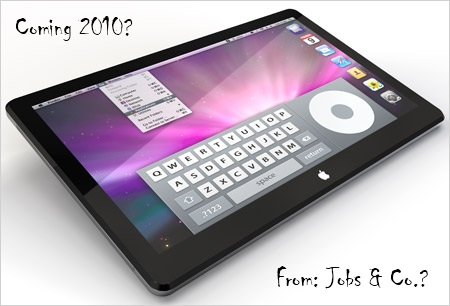
While the “companion not a replacement” motto is a good one for Microsoft, I’m not sure it reflects reality. For some consumers, netbooks are a second or third PC; for many who bought the devices at the holidays, netbooks were purchased as a replacement for aging desktop/laptop PCs. If slates are nothing more than fancy e-readers that can also play music, they might be supplemental. But if they are full-fledged computing devices (as the rumored Apple iSlate supposedly is), with souped-up media-consumption capabilities, they may become PC replacements.

What’s your prediction? Will the new class of slates/tablets or whatever you call them help or hurt Microsoft, in terms of Windows revenues/sales?
Read More

Could A Tablet Replace Your Notebook?

Hardware vendors at last week's Consumer Electronics Show showed off numerous new tablet and notebook designs. Some offerings, including the Lenovo Skylight Smartbook, earned cheers. Others -- yeah, we're looking at you, Microsoft-HP tablet -- heard mostly jeers. Apple wasn't at CES, of course, but the neverending rumor mill assures us that Steve Jobs's bound-to-be-cool tablet will debut by the end of this month.

All the CES hardware chatter led me to wonder if a tablet/slate would work as a suitable notebook replacement. For many consumers, particularly those who use a standard laptop -- or maybe a netbook -- primarily for e-mail and Web browsing, the answer may be yes.

This depends, of course, on the capabilities of said tablet. As last week's CES announcements indicate, the tablet remains a nebulous category. The Lenovo Ideapad U1 hybrid, with its removable display, is both tablet and notebook, as is the not-quite-ready Freescale Semiconductors tablet. And Asus displayed a two-screen tablet prototype that unfolds into one large OLED display.

Notebooks? Well, we know one when we see one -- unless, of course, you're referring to the Lenovo and Freescale hybrids, in which case things are a little less clear. But for sake of argument, let's define the laptop/notebook device as one with a physical (QWERTY) keyboard attached to a flat-panel display. Yes, I'm including netbooks, which are really just tiny notebooks, in this genre too.

Could You Go Tablet?

Many people hate the QWERTY keyboard, a 19th-century relic that somehow survived the transition to the digital age. After decades of use, I'm a decent touch typist, but millions of computer users -- the two-fingered tappers -- yearn for something better.

If you use a physical keyboard only to tap out short e-mail messages, Twitter or Facebook posts, and other quick text blurbs, you may be ready to deep-six QWERTY. But what should take its place?

Ideally, tablets need excellent handwriting or voice recognition to garner mainstream acceptance, but we're years away from data input that mirrors Star Trek-style simplicity. That said, a mobile professional may prefer today's tablets to complete online forms, browse the Web, and send quick messages.

Students? There's a market segment that could really benefit from fast, accurate handwriting recognition. Voice imput wouldn't work in the classroom. For now, a laptop is the better choice. Plus, students tend to write a lot of papers, and the QWERTY keyboard is the best choice for long-form writing. (Sure, cut-and-paste plagiarism works well too, but that's another story.)

A tablet may have ergonomic drawbacks, too. When you're sitting at a desk, a notebook is more ergonomic than a slate-like device that must be held or cradled. And touch input can be tiring when you're holding your arm in an elevated position for hours at a time.

It's doubtful that tablets will replace laptops anytime soon. They likely replace standalone e-readers, however, as tablet prices start to fall.
Read More

Tuesday, January 05, 2010

Microsoft to unveil HP-made slate PC (Courier?) on Wednesday?

Microsoft’s push for the Tablet PC segment has earned them widespread ridicule and relatively minimal market penetration, something that’s only beginning to change with the advent of lower-priced multitouch notebooks and netbooks that use a basic touch-UI rather than in-depth handwriting recognition and the like. So we’re not quite sure what Microsoft may have on the cards for CES 2010 tomorrow, what with the New York Times reporting that Steve Ballmer will take to the stage for his company’s keynote clutching an HP-made slate.

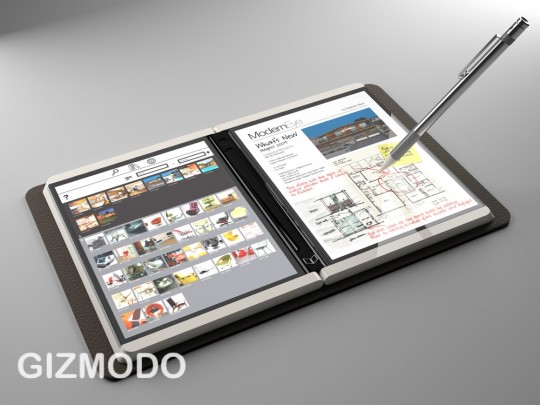
According to the NYT’s sources, the Microsoft slate – it’s unclear which branding it will carry – might arrive on shelves by mid-2010, and be focussed on multimedia and ebook content consumption with a multitouch interface. It’s possible that this is the production version of the Microsoft Courier tablet we’ve seen leaked information regarding since September 2009.

Of course, neither HP nor Microsoft are spilling any details in advance of Ballmer’s speech, and the news might simply be a new HP tablet; we’re expecting the company’s CES 2010 line-up to be revealed in full later this week. Still, we’re keeping our fingers crossed that it does turn out to be the Courier: that would make for an interesting battle with the Apple iSlate expected to arrive later this month.
Read More

Monday, January 04, 2010

2010: The year Microsoft could give the tablet another shot?

Though you’d never know it from reading most of the recent iSlate posts and stories, Microsoft actually had a pioneering role in the tablet space. One post I saw today thanks to a Tweet from my ZDNet blogging colleague Ed Bott) by GottaBeMobile Founder Rob Bushway focuses on the Softies’ influence in tablets. Bushway’s conclusion was if the Redmondians don’t change their ways, 2010 could be the year that Microsoft lost the tablet market.

I’d argue Microsoft already lost the first-generation tablet market — due primarily to lack of marketing, as much as anything else. And I’m not saying that simply because I, myself, am not a tablet fan. I’m also not a fan of touch on a PC or anything with a screen bigger than a phone because there’s no reason, other than possibly in a kiosk-type setting, that using touch on a PC brings any real benefits to the party.

But Microsoft officials, especially Chairman Bill Gates, have big believers in tablets and touch. They’ve been consumed with finding a way to get these two technologies off the ground and have been willing to keep pouring money and time into research and development to do so. But once they had some promising prototypes and partners in place, they dropped the ball.

Even though many pooh-poohed Microsoft’s Origami/UMPC (ultra-mobile PC) handhelds, in hindsight they don’t look as ridiculous as many originally thought, at least in my opinion. Microsoft actually had some ambitious and interesting plans for Windows-based UMPCs. Here are some of the guidelines Microsoft offered in 2007 to hardware makers interested in building Windows Vista-based UMPCs:

* Five- or seven-inch displays
* Lower-power LED-backlighting
* Screen resolutions of 1024 X 600 (not the 800 x 480 minimum common with the first-wave UMPCs)
* WiMax and integrated WWAN connectivity (supplementingthe existing 802.11 b/g wireless and Bluetooth connected devices)
* New input options, including thumb/QWERTY keyboards, along with the more-standard touch, stylus and thumb-based controls on current UMPC models

Microsoft officials were predicting “second-wave” UMPCs would have 1 GB-plus of RAM, WDDM/DX9+ graphics support; three to four hours of 3-cell battery life; a weight of under 1.5 pounds; and 18 to 20 mm thick form factors. Back in 2007, the Softies also were hoping to see UMPCs with $500 price tags.

What a difference a couple of years makes. UMPCs vaporized. Netbooks/ultra thins/e-readers took their place… sort of. And the bottom fell out of the PC market, price-wise, making $500 for UMPC-type device look pricey.

Maybe Microsoft’s big mistake was putting too many eggs in the Windows basket with mobile devices. Why not also offer five-inch devices running Windows Mobile (or some other Windows Compact Edition derivative)?

Again, many seem to have forgotten, but Microsoft has been exploring that possibility. Len Kawell, a Microsoft Distinguished Engineer (and former colleague of Microsoft Chief Software Architect Ray Ozzie) has been looking into the possibilities around Windows-Mobile-based Mobile Internet Devices (MIDs). There’s been no word in the past year as to what’s come of Kawell’s investigations, but there have been public demos of Windows Mobile-based MIDs based on ARM. And with Web apps gaining in prominence, the lack of Windows Mobile apps for non-Intel/AMD processors may not be the deal breaker that it once was….

There’s one other Microsoft project in the works that may have a bearing on Microsoft’s next-generation tablet designs. That’s the “Oahu” Surface knock-off — a “small-ass table” that would be a more affordable, consumer-focused version of Microsoft’s multi-touch table. I’ve heard that Oahu is actually the precursor to the rumored Microsoft Courier tablet (and may be being designed, in part, in Hawaii), but can’t verify this.

Speaking of Courier, that spiffy next-gen touch tablet still seems quite a ways off, if it ever does move beyond the marketing video stage. But what if there’s a Windows- or Windows Mobile 7-based MID/tablet in the wings, being built by one of Microsoft’s hardware partners, that can run a more practical, easier-to-learn version of One Note, plus access Web apps, Zune subscription-based music, and (for those who game), Xbox Live? If such a device didn’t force me to go 100 percent touch, I’d be sold!

If Microsoft doesn’t end up fielding something that looks and works exactly like Courier, what features would its next-gen tablet have to include for you to consider it a viable alternative to other tablets/MIDs/netbooks out there?
Read More

Lenovo IdeaPad U1 Hybrid: laptop by day, unhinged tablet by night


We're still trying to wrap our heads around what Lenovo's just announced here, but it appears that the 3.8-pound IdeaPad U1 Hybrid is a 11.6-inch laptop with a retractable multitouch screen. It's sort of like the Always Innovating Touchbook, but in our opinion a lot more interesting. When the screen is locked into its upright position in the laptop's chassis, it's powered by a CULV Intel Core 2 Duo processor and runs Windows 7 Home Premium. But when the screen is pulled from its shell it morphs into a Qualcomm Snapdragon powered-multitouch slate with a 16GB SSD that boots Lenovo's customized Skylight Linux interface. Two processors and two operating systems? Hybrid is right. It seems like we'll have to wait until June to buy the $999 device, but we've been promised a look at it in Vegas so stay tuned.


Read More

Tablet Wars: Blame That Damn iPhone

The iPhone has kicked off a technological revolution, and the world has grabbed hold with both hands and is embracing as if it’s the Holy Grail of the industry. The touch revolution has even turned this young blogger into a FarmVille player on steroids, and we will no doubt see the world succumb once the computing Pandora’s box is opened.


Apple are supposedly working on the ‘iSlate’, HTC and Google are working together on a tablet suited for Chrome OS, and no doubt Microsoft will throw something together to try and combat the competition.

But I can’t see it taking off in the academic community. If anything, I see at this point a device which would be smaller than a tablet PC, much larger than the iPhone but around medium-sized to that of the Kindle. So it may be large enough to browse on, but probably too small to hammer away on the on-screen keyboard without feeling like you’re going to break the damn thing.

Ergonomically, it’ll be a disaster. Just think for a moment, how would you type? Would you need to raise your knees and balance it as you tap the on-screen keyboard? Would it have something in the back to hold it at an angle to reduce RSI or even make it viewable? Will it be too heavy, or more realistically, will the weight distribution be way off?

The tablet is a stupid, stupid idea; I don’t even need to use one to know how I’d feel. The Kindle can get away with it as it is predominantly a reading device. You hold with two hands and you read with your eyes. The iSlate or any competing pure-tablet computer will have to be held with two hands and then somehow be typed on with the remaining hands of Shiva.

I can’t see academics using it, but students could buy it but only because it’s the “fashionable thing to do” while they slash away their money into technology they will barely use. We already know that students will buy anything they can get their hands on.


While personally I agree with Siegler when he says, “if Joe Wilcox ran the computer industry, we’d still be using typewriters”, but Wilcox makes a set of rare points I agree with about the tablet industry.

Off on a tangent for a second: could Apple be creating a tablet, something that we haven’t really seen before in mass production, just to prove a point that it can? There is no answer to this hypothesis, but it would add another notch to the bedpost of Apple to be “the first” at something else as well.

The tablet isn’t designed at anybody specifically and while Apple is convinced (and convincing others) that the future of computing is touch-based, I wholeheartedly disagree and will fight it to the last dying breath.

Frankly on this ending thought, a tablet without a keyboard - limiting the user to one awful method of input - is stupid, and it simply annoys the hell out of me.
Read More

Saturday, January 02, 2010

Rumor: Google and HTC Working On a Chrome OS Tablet in A few Months

Everyone is clamoring about tablets these days—ourselves included—so it's not too surprising that Google and HTC are set to join the fray. They are reportedly working together on a Chrome OS Google Tablet.


Smarthouse, an Australian publication, reports that HTC and Google have been collaborating "for the past 18 months" and have produced "several working models of a touch tablet," including one outfitted with Google's Chrome OS. We wrote why a Google Tablet would be a good idea last month, and with the Apple Tablet discussion reaching a fever pitch, it's harder and harder to get excited about a Chrome OS netbook from Google.

Having collaborated on the Nexus One, a smart phone that impressed us with its design as well as its hardware, HTC and Google partnering on a tablet seems like a promising prospect. But will it "compete head on" with Apple's tablet as Smarthouse claims? Probably not.

From what we know, it seems like Apple is putting as much effort into their tablet's content as they are into the gadget itself. We've written extensively on how an Apple tablet could redefine newspapers, textbooks, and magazines. In the last case, we've already salivated, more than once, over concepts for how magazines might evolve in a multi-touch future. Add that to Apple's recent acquisition of Lala, a move that likely points to a cloud-based future for iTunes, and the reports that Apple is trying to secure TV show subscription packages for the iTunes store. Admittedly, not a whole lot is certain about Apple's tablet. But you start looking at all of those pieces and how they might fit together around one device, you can easily envision a gadget that is focused on streaming the stuff you read, the stuff you listen to, and the stuff you watch.

It's hard to foresee a future in which a Google Tablet tries to go head to head with Apple on the content level. That's not to say, however, that there aren't some compelling things that could be offered by a Google tablet. As the launch of Google's Chrome OS made clear, they're looking toward a future with a multitude of devices that can access the Internet quickly, cleanly, and cheaply. A Google Tablet could be just the thing to realize all of those goals. When we tried out the JooJoo tablet, we saw how a well-designed tablet for consuming web content could provide an engaging experience. A Chrome OS tablet by Google would likely work the same way, keeping typing to a minimum and offering a literal hands-on web surfing experience.
Read More

Thursday, December 24, 2009

Tablet touchdown in 2010?

So Steve Jobs is “extremely happy with the new tablet”. That’s always good news with the Apple chief (he’s apparently already killed it off twice). Furthermore, Apple is expected to make a major product announcement on Tuesday, January 26th in San Francisco, and Piper Jaffray analyst Gene Munster noted that “there is a 75 percent likelihood that Apple will have an event in January and a 50 percent chance that it will be held to launch the Apple Tablet”. Apple shares today are currently up and have hit a record high.

In the last decade we’ve had computers. Then entered phones designed to, in some cases, replace those computers. And then gadgets appeared and tried to replace those phones. So these tablet concepts that pop up every now and then shouldn’t actually create such a fuss, but for some reason, they do just that. These videos illustrate how beautiful and creative technology can be, but until a company actually fabricates the hardware for such an amazing experience to run on, these fantastic ideas are reduced to nothing but abstract fantasies, so to speak.

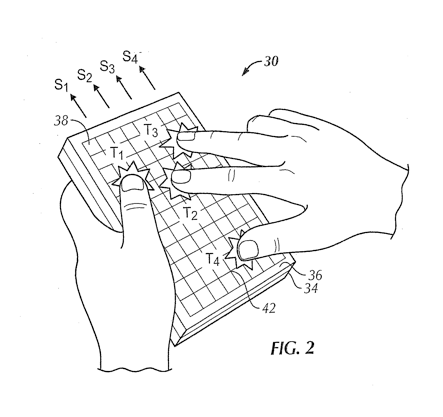
Enter the Apple Tablet (guesses on name?). Apple is legendary for transforming industries with its pioneering products that almost religiously embrace simplicity and ease of usage in their design ideology. However, Apple is also notoriously tight-lipped about new product launches and has not released any information regarding technical specifications at this current point, although there is a newly revealed patent application report from AppleInsider that claims it will possibly have multi-touch capabilities with tactile feedback, describing a surface which can “create physical bumps or dots for the user to feel when it is in keyboard mode”. There is practically no doubt that some kind of tablet-like device will be released in 2010; there are many waiting to see just how Apple takes on this challenge by revolutionizing and changing the way we interact with new media: websites, video, music, magazines, newspaper, and books that are all moving to digital format.

Read More

Tuesday, December 22, 2009

OLPC shows off absurdly thin XO-3 concept tablet for 2012


Still have a bit of faith left for the OLPC project? Good, you're gonna need it: designer Yves Behar has unveiled his latest concept design for the now-aiming-for-$75 vision, and it's all screen. Keeping with the newfound trend toward tablets, the XO-3 is an 8.5 x 11 touchscreen, coupled with a little folding ring in the corner for grip and a camera in the back. To keep things minimal the plan is to use Palm Pre-style induction charging, and less than a watt of power to keep an "8 gigaherz [sic]" (800MHz?) processor and a Pixel Qi screen powered. At half the thickness of an iPhone, this vision is obviously banking heavily on presumed technology advances by 2012 (the projected release date), but it's not too hard to see somebody making this form factor happen by then-ish. Nick Neg isn't all hubris, however: "Sure, if I were a commercial entity coming to you for investment, and I'd made the projections I had in the past, you wouldn't invest again, but we're not a commercial operation. If we only achieve half of what we're setting out to do, it could have very big consequences."


Read More

Monday, December 21, 2009

Why netbooks will still trump tablets in 2010

Tablet backers miss the key point: price. There are four others.

Netbooks have had no shortage of naysayers since they first appeared two fall seasons ago.

Critics said they were too small, underpowered, and fragile, for starters.

Tell that to the consumers who bought more than 50 million netbooks worldwide in the past two years, according to ABI Research.

ABI predicts that netbook sales will continue to explode, with 139 million sold in 2013. But doubters are re-emerging in full force. This time, giddy on the many rumors of Apple's "JesusTablet", they are banging the tablet computing drum.

But there are good reasons to be skeptical that the tablet PC will sweep away the netbook next year.

I've seen this movie before

The tablet computer has been the PC industry's Holy Grail for nearly two decades. Popular Mechanics wrote in 2002, "Creating a user-friendly tablet computer has been a goal for software and hardware manufacturers for about a decade, but nothing has quite measured up to expectations..."

Tablet PCs are used today, but only in any scale in certain industry niches. Their failure to catch on widely hasn't stopped proponents from declaring the imminent arrival of "Year of the Tablet" in 2002, 2004, 2006, and again in 2008.

"I don't think [tablets] are ready to happen," said Geoff Walker, product marketing manager at touchscreen maker, NextWindow Ltd. A former tablet PC marketing executive-and-industry analyst. Walker sees two problems: a lack of applications taking advantage of finger- or pen-based input, and "the fact that you can walk around with a tablet like a clipboard is far more appealing to vertical markets than consumer."

Statisticians say that just because you flip a coin and get heads 7 times in a row doesn't mean that you're more likely get tails on your eighth flip. Each flip is an independent event. You're not "due," even if the overall odds are 50:50.

The analogy isn't perfect, but after hearing that pundits have been declaring the "Year of the tablet" for the past seven years, do you think tablet PCs are finally due?

The first of (all new!) tablets too expensive

The only tablet with a confirmed price tag is the JooJoo, known earlier as the CrunchPad, at $499. Such a spend can buy Amazon's latest Kindle 2 e-reader ($259) and any number of new or refurbished netbooks from Acer, Asus, Dell and others. And a newcomer has just-introduced the $99 CherryPal.

As one repentant tablet enthusiast puts it, "I see very little reason for anyone to shell out the same amount of money for an overall less capable tablet."

Other cheaper tablets will definitely follow, but analysts including Jack Gold question whether they will "have enough horsepower."

"A lot of stuff goes on under the hood when you draw with your finger on a tablet screen that you don't need to do on a PC," Gold said. "The question is: Can you make it responsive enough at that price?"

One thing is for sure: Apple's "iPad" won't risk performance for price. "We don't know how to make a $500 computer that's not a piece of junk, and our DNA will not let us ship that," said CEO Steve Jobs this spring.

Recession still bites

$1,000 for a computer isn't necessarily that much. That's how much the cheapest laptops cost earlier this decade. And it's how much Apple still charges for its lowest-end MacBooks.

But there are innumerable cheaper alternatives today. And the tentativeness of the economic recovery means that consumers will still flock to lower-priced products like netbooks. Gartner Inc. predicts that while PC shipments will grow 12.6% next year, revenues will trail, increasing just 2.6%.

Vendors, especially more agile Asian manufacturers such as Acer Inc., Asus Inc., and Lenovo Group Ltd., will keep saturating the market with lower-priced netbooks to gain share from Dell and HP, says Gartner.

Netbooks get ergonomic

In my colleague Mike Elgan's article "Hello tablets. Good-bye netbooks!", he argued that netbooks were on the way out because users hated interacting with them.

"Netbooks suck for typing. Believe me. I'm a professional," he writes. "One problem is that the keyboards are too cramped. But the other is that tiny netbooks force you to have the screen too close for comfortable reading."

I wonder if Elgan owns a first-generation netbook or if he is 6-foot, 8-inches tall and has Kielbasas for fingers. Certainly, a number of his readers disagreed with him.

"My netbook, the ASUS 1005HA -P... has an excellent keyboard, extremely easy to type," wrote one reader. Another wrote, "I am quite fond of using a netbook for taking notes in class."

Manufacturers have wised up to the size issue. Last year's crop came with keyboards that averaged 92% of a standard laptop.

This year, they edged up again, with many models coming in at 95% of a standard laptop. Samsung went further: Its latest NC series netbooks all boast 97%-size keyboards.

Others, such as HP's Mini 5101 have the same flat, widely-spaced keys (the "island" keyboard) as Apple's MacBook (while keeping the 95% size.)

Today's netbooks have screens that, while not as big as a desktop monitor, can offer just as much real estate. That's because most netbooks, whether their screens are 10 or 12 inches in size, can be upgraded to 1366x768 or 1280x800. That's the same as a 19-inch LCD desktop screen. Even at the basic 1024x600, that is as wide as your 17-inch CRT was earlier this decade.

The latest netbooks are also able to take advantage of those screen sizes. Lenovo's IdeaPad is one of many using Nvidia's Ion GPU -- the same engine in Apple's MacBooks -- to render smooth video on its 12-inch, 1,280x800 screen.

Netbooks seem to have found the ergonomic sweet spot for many if not most consumers. Combine that with their low entry price, and ABI analyst Jeff Orr expects netbooks to remain much more popular than thin-and-light/CULV (consumer ultra-low-voltage) laptops costing several hundred dollars more.

Big forces back the netbook

Two years ago, it took a renegade Taiwanese firm Asus to defy Microsoft and Intel and come out with the groundbreaking Eee.

Today, the forces that hated on netbooks are now backing them. Microsoft made sure Windows 7 supports them, and is pushing Windows Embedded CE for them, too.

Intel keeps pumping out new Atom chipsets, and is keen on fending off competitors like Nvidia (ION graphics) and ARM chip makers like Qualcomm, FreeScale, Texas Instruments and others.

And Google is so hot on netbooks that it is not only developing its Chrome OS exclusively for netbooks, but it is, according to the rumor du jour, now thinking about building its own branded netbook.

A netbook. Not a tablet.
Read More

Thursday, December 17, 2009

Archos 9 PC Tablet finally shipping: gets video unboxing

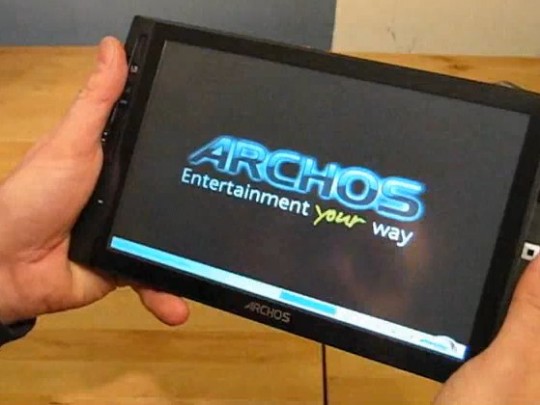
The Archos 9 PC Tablet has been a long time coming, with preorders for the touchscreen slate only beginning to ship this month. Steve over at UMPC Portal has managed to acquire one of the first units, and has unboxed and given a brief overview of the 1.1GHz Atom Z515 machine on video.


By now there’s not much to surprise us in the hardware. The Archos 9 has a 60GB hard-drive, 1GB of RAM and runs Windows 7 Starter, along with WiFi and Bluetooth (but no 3G), while up front there’s a webcam, optical mouse and 9-inch resistive touchscreen running at 1024 x 600.

Steve is finding that battery life works out to around three hours with the WiFi turned on and the screen brightness at 50-percent. It’s reasonably light but not so much that you could use it for that full three hours holding it in just one hand; that tallies with our own findings when we played with the Archos 9 back in September. We’re not, it has to be said, especially confident about the performance of that 1.1GHz processor, either. Still, we’ll reserve judgement until the reviews start coming through.

Read More

Mag+ digital magazine reader concept headed to 2010 prototype [Video]

Prototype digital media tablets seem to be the concepts of the moment, and we’re particularly enamoured with Bonnier R&D’s Mag+. They reckon that part of the appeal of magazines is the ability to “lose yourself” in the content, and as such the concept - which was designed by BERG – is navigated by “shifting focus” though tapping different sides of the screen.


Interestingly, despite the almost unfathomable amount of content available out there, Bonnier R&D discovered that readers prefer to know that their magazines – digital or print – have an end and are not infinite. People, they claim, like the sense of completion when they reach the end, and they also like knowing how far through the content they are; that’s contrasted with the sense of anxiety triggered by an ever-filling RSS reader.

There’s also search – with an on-screen keyboard – bookmarking and saving of pages, and a clever on-screen “atom” with petal-like options that can be pulled up with a tap-and-hold gesture. BERG’s renders are incredible, really impressive, and the full overview (the first video below) is worth a view if you have eight minutes to spare. Following it is just the excerpts of the concept. Excitingly, Kicker Studio are apparently working on translating the concept into a functional prototype in 2010.

Full overview:
Concept footage excepts:
Read More

Friday, December 11, 2009

Hello, tablets. Good-bye, netbooks!

Seven trends are conspiring to usher in a tsunami of tablets -- and sink netbooks

ook, I know you like the netbook idea -- and you love netbook prices. If you're like most people, you think tablets are expensive, slow, heavy and a pain to use. But if you've bought one, you know that netbooks aren't as great as they sound. And next year's tablets will be way better than you think.

Of course, everybody's talking about, hinting at and arguing over all the non-existent tablets of tomorrow. You've heard a lot about Apple's rumored tablet, for example, which could hit the market as early as March.

News broke recently that Apple has taken control of the TabletMac trademark. The tablet formerly known as CrunchPad (now unfortunately named the JooJoo) goes on sale today for $499. Asustek is said to be planning to launch a tablet based on the Eee PC. And Dell may show a touch-screen Android tablet at the the Consumer Electronics Show, or CES, next month.

I'm sure this is one seafaring hazard metaphor too many, but all this tablet news is just the tip of the iceberg. You can expect small touch-screen tablets from all major vendors, and minor ones as well.

As Ian Paul argued today in a PC World column, "2010 will be the year of the tablet computer." (Paul is one of the few Apple tablet deniers, but his recent piece indicates that he may be coming around to the inevitable.)

Why tablets are finally ready for prime-time

Tablet devices have a bad reputation, thanks primarily to Microsoft's fuzzy vision for the devices, which resulted in several years of incredibly expensive, slow, clunky, unappealing pen-based tablets from all the usual Microsoft partners.

Seven trends are conspiring as we speak to usher in a tsunami of tablets totally unlike the current generation of tablet PCs. Here's what's new:

1. Touch instead of pen

Microsoft always loved the stylus, but most people hate it. Apple and others understood that actually touching the screen is far more appealing than using some funky pen. And touch requires an entirely different user interface, which Microsoft was unwilling or unable to build into Windows until Windows 7.

The casual observer might believe that the usability difference between pen and touch is small. But using a pen is an unnatural act, one that until very recently only a tiny minority of people ever engaged in. The psychological payoffs for using a pen on paper are the tactile feel of the paper, the instant feedback of the trail of ink and the physicality of stacks and files and binders of paper notes. Pen-based computer systems don't offer any of those payoffs.

Meanwhile, interacting with and manipulating objects in our environment with our fingers is the most natural of acts. People have been doing it since before our species even existed.

Most users don't really know why they like or don't like different user interfaces. They don't know why tablet-based and stylus-based devices are somewhat irritating to use, and why touch-based interfaces like the iPhone are a joy to use. The reason can be found not in the design of the gadget, but in the design of humans -- we're the ones who are touch-based systems.

In one respect, pen and touch systems are opposites. One makes us adapt, the other adapts to us.

The main difference in usability between yesterday's tablets and next year's tablets is touch. And touch will make all the difference in the world.

2. Cell phone operating systems

Current tablet systems are PCs that run full-size PC operating systems, usually Microsoft Windows. The combination of mobile processors and the extra layer of code required for the pen system resulted in a relatively slow experience. It also helps make tablets more expensive.

Next year's tablets will run cell phone operating systems like iPhone OS, Android and others. That will make them cheaper, faster and far more usable on a mobile device.

3. Cheaper components

Because tomorrow's tablets will be big cell phones, rather than small PCs, they'll be cheaper to manufacture. They'll have lower-powered chips, less RAM, smaller screens, fewer ports and cheaper (or free) operating systems.

Plus, Moore's Law is still in effect. All component prices will come down, which means next year's touch tablets will be priced similarly to last year's netbooks: Cheap!

4. App stores

Apple's iTunes app store demonstrated how tightly designed, limited use, inexpensive applications can turn a ho-hum phone into an incredibly powerful and usable platform. All the other major smart phone handset makers followed suit, and developers are pouring incredible time, money and energy into creating mobile games and applications, many of which will work on touch tablets just like they do on cell phones.

Unlike pen tablets, which Microsoft envisioned we'd use for running Microsoft Office, tomorrow's tablets will run a gazillion free or low-cost apps from the platform vendors' app stores.

Because of cell phone apps stores, touch tablets will be way more fun to use than netbooks, old-school tablets or even cell phones (because their screens are bigger).

5. The rise of e-books

Everybody is talking about e-books. And although dedicated e-book readers will always be with us, most people will read electronic books with cell phones and touch tablets. Ignore the naysayers. Tablets will be great for reading books. You'll even be able to turn the page by flicking your finger across the top right of the page, kind of like a paper book.

6. Faster mobile broadband

The carriers haven't figured out the right pricing models for data in a world where everything is connected via mobile broadband. But they will. And when they do, touch tablets will be sold like cell phones, and always-there Internet connections will be standard.

7. HD video on demand

Consumers are gradually discovering that getting TV and movies over the Internet is the way to go, the TV itself is optional, movies are downloadable and the cable subscription probably isn't worth the money. Just as the masses really understand all this, along comes a cheap, high-quality tablet that functions largely like a cable-connected, Blu-ray-connected, DVR-connected TV set, but one you carry with you everywhere you go.

And this will be the killer app that mainstreams touch tablets: It's a mobile HD TV with a universe of downloadable programming.

Why tablets will kill netbooks

Netbooks suck for typing. Believe me. I'm a professional. One problem is that the keyboards are too cramped. But the other is that tiny netbooks force you to have the screen too close for comfortable reading.

A touch tablet is also a netbook. Just add a kickstand to prop up the screen and add a Bluetooth keyboard. The best part is that you can add the keyboard of your choice, not the one that happens to match the netbook's screen size.

It can be a fold-up, roll-out, light-based, or even giant old-school keyboard. Or it can be something that is built-into and detaches from the tablet itself, or the tablet's case. And the screen can be propped up and placed at any distance, not the distance dictated by the keyboard's location.

What is a netbook, anyway, but a tablet with a bulky keyboard attached? And what is a tablet, but an ergonomically adjustable netbook that also functions without the detatched keyboard?

Netbooks won't stand a chance against the tidal wave of touch tablets coming next year. Tablets have many advantages over netbooks, but netbooks have very few advantages over tablets.

So here's my advice. Sell your netbook now while you can still unload it. By this time next year, the space between cell phones and laptops will be taken over by a new generation of touch tablets, and you won't be able to give that netbook away.
Read More